

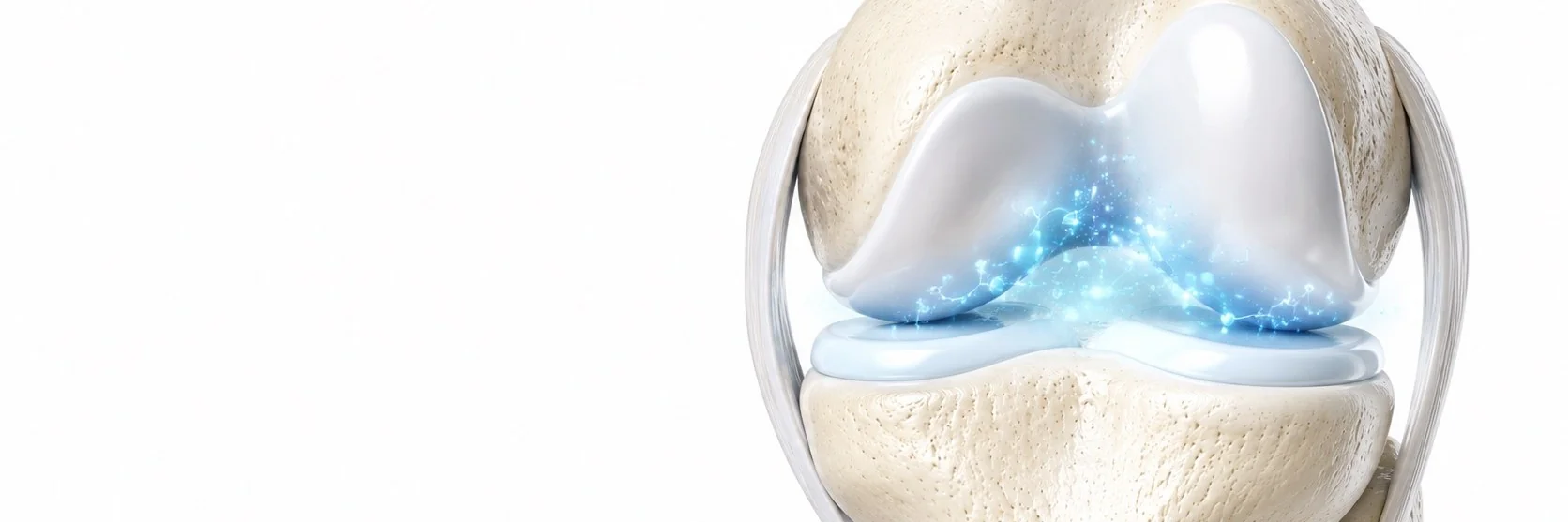
What is molecular and biological regenerative therapy?
The human body has an inherent capacity to heal injuries from within. Molecular therapy, also known as autologous blood therapy, works with this capacity. Using a specialised process, the healing cells and signalling molecules are extracted from the patient's own blood, concentrated, and delivered directly into the inflamed or injured tissue. The body can then activate its own healing response particularly effectively, supporting tissue repair without the use of medication.
During my training in Germany, at one of the European centres where this therapy was first developed over 20 years ago and developed into a an established treatment option, I learned this approach as part of routine practice. It is a modern, associated with very few side effects, and highly effective long-term treatment when applied to the right indication.
What does the therapy achieve?
I use molecular therapy for five main clinical objectives:
- reduction of inflammation in the affected tissue
- support of the body's own regeneration processes
- effective and lasting pain relief
- improvement of joint mobility
- restoration of daily activities, return to the things the patient could not do before
These are the five outcomes I look for after completion of treatment, and they are how I judge whether the therapy is working for the individual patient.
How is the treatment performed?
A small amount of blood is drawn from a vein in the arm, just like a routine blood test. The blood is then processed in a specialised system to separate and concentrate the healing cells and signalling molecules. The resulting preparation is collected in a sterile syringe.
The target joint or tissue is prepared and thoroughly disinfected. Under image guidance, I inject the patient's own concentrated cells precisely at the site of injury or wear, where the biological healing response begins immediately.
The treatment is usually delivered as a series, typically four to six injections at weekly intervals. The full effect is typically reached approximately six weeks after the final injection.
Regenerative therapy for arthritis
Molecular therapy with the body's own biologics can help slow, and in selected cases partially stabilise, the progression of arthritis in nearly all joints. Significant side effects are uncommon. The duration of benefit is usually measured in months, and often years.
For chronic joint disease I recommend repeating the injection series approximately once per year. For certain joints, the small joints of the midfoot, for example, the intervals can sometimes be considerably shorter, individualised to the patient.
Regenerative therapy for sports injuries
Autologous biologics have been used successfully in orthopaedic practice for over 20 years, particularly for injuries and conditions affecting joints, muscles, ligaments and tendons. Molecular therapy is therefore well suited to the treatment of sports injuries, including chronic tendon irritation and tendon tears.
For professional athletes, autologous biologic therapy is recognised by the national and international anti-doping authorities (NADA and WADA). Treatment generally requires only notification, no prior approval is needed.
Regenerative therapy for back conditions
Molecular therapy is also used successfully for spinal conditions, particularly facet joint arthritis, and for selected symptoms that persist after a disc herniation.
These are areas where targeted, ultrasound-guided injection of autologous biologics can provide meaningful clinical improvement, especially when conservative treatment has reached its limits and surgery is not yet appropriate.
How safe is the therapy?
Molecular therapy is among the safest biological interventions in orthopaedic practice. Because the injected material is the patient's own blood, there is no risk of allergic reaction or disease transmission. Significant side effects are very rare. Lack of treatment response, in correctly indicated cases, are also very rare.
The most common reaction is mild local soreness for two to four days after the injection, expected, manageable and usually short-lived.
How do I decide if it is right for you?
My approach is straightforward. I recommend molecular therapy when:
- the diagnosis is clear and has a meaningful biological component (arthritis, tendinopathy, partial tear)
- conservative treatment has reached its limit and surgery is not yet appropriate, or you wish to try a biological approach first
- the targeted tissue still has the capacity to respond, the tissue still retains healing potential
- the protocol can be delivered properly: ultrasound-guided, full course, with structured rehabilitation alongside
I will tell you honestly when it is not the right answer, when surgery is the better option, when the tissue damage is too advanced, or when the underlying problem is mechanical and biological therapy alone cannot adequately address it.