

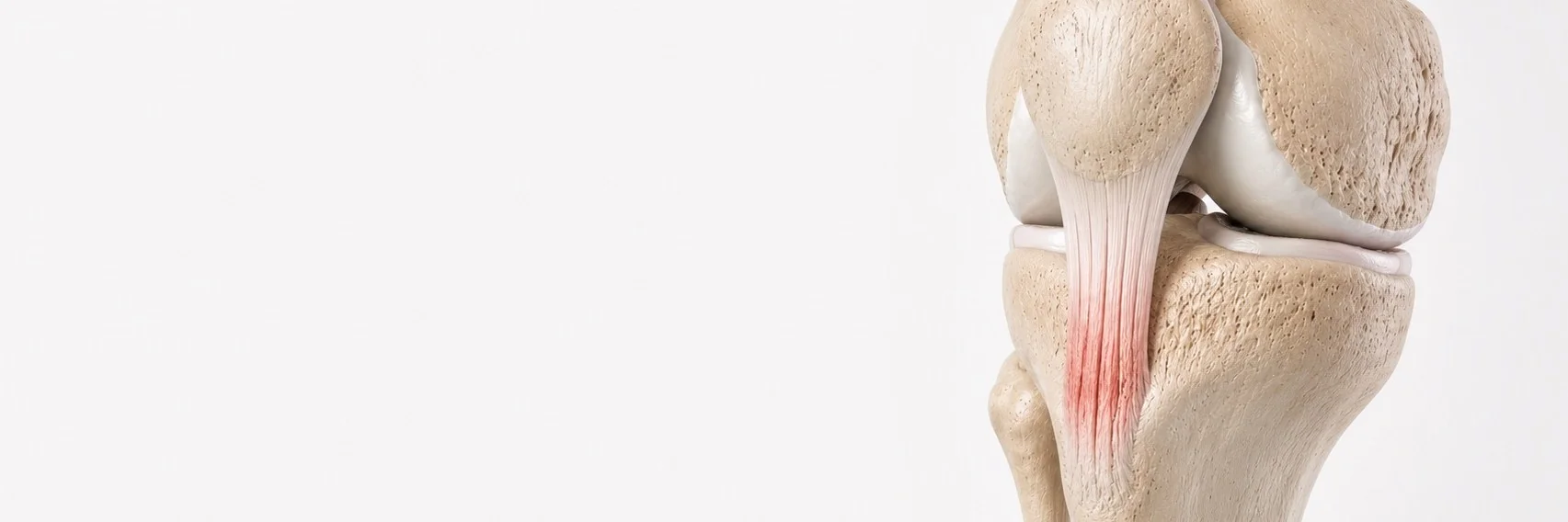
What is patellar tendinopathy?
Patellar tendinopathy, commonly known as jumper's knee, is a condition involving degeneration and chronic irritation of the patellar tendon, the tendon that connects the patella (kneecap) to the tibia. Despite the term "tendonitis" sometimes used, the underlying problem is degenerative rather than inflammatory: the tendon develops microscopic damage and fails to heal properly under repeated load.
What causes patellar tendinopathy?
- repetitive overload, particularly jumping and landing sports (basketball, volleyball, athletics)
- sudden increase in training intensity or volume
- tight quadriceps and hamstrings
- weak or poorly conditioned quadriceps
- biomechanical abnormalities (foot mechanics, malalignment)
- hard training surfaces
What are the symptoms?
- pain at the lower pole of the patella, where the tendon attaches
- pain that is worse with jumping, running and squatting
- stiffness, particularly first thing in the morning
- tenderness on direct pressure over the tendon
- in chronic cases, persistent pain with everyday activities like climbing stairs
How is the diagnosis made?
- clinical history and examination
- ultrasound, useful for assessing tendon structure and any neovascularisation
- MRI, when more detailed assessment is needed or when other diagnoses are being considered
What is the conservative treatment?
Conservative treatment is the cornerstone of management for patellar tendinopathy. The key principles are load management and progressive loading of the tendon under physiotherapy guidance:
- relative rest and modification of provocative activities
- structured physiotherapy with progressive eccentric and heavy slow resistance loading, the gold standard treatment
- addressing biomechanical factors, flexibility, strength, technique
- avoiding cortisone injections, which weaken the tendon
Are injections useful?
I always tell patients that conservative loading-based therapy is the foundation of treatment. In selected chronic cases that have not responded to a properly conducted loading programme, Molecular & Biological Regenerative Therapy (PRP) under image guidance can be a valuable additional tool, and is one of the indications with the strongest scientific support for this treatment. Cortisone injections are generally avoided because they weaken the tendon and can predispose to rupture.
When is surgery recommended?
Surgery is reserved for the small minority of patients with chronic, persistent tendinopathy that has not responded to at least 6 months of high-quality conservative treatment.
How is surgery performed?
When surgery is required, I perform debridement of the degenerative portion of the tendon, often combined with treatment of the lower pole of the patella. This can be done arthroscopically or through a small open incision depending on the pathology. I apply modern techniques aiming for stable repair and optimal functional recovery.
What is the recovery after surgery?
- knee brace for 2–4 weeks
- structured progressive rehabilitation focused on rebuilding tendon load capacity
- return to running typically at 3 months
- return to jumping and pivoting sports at 4–6 months