

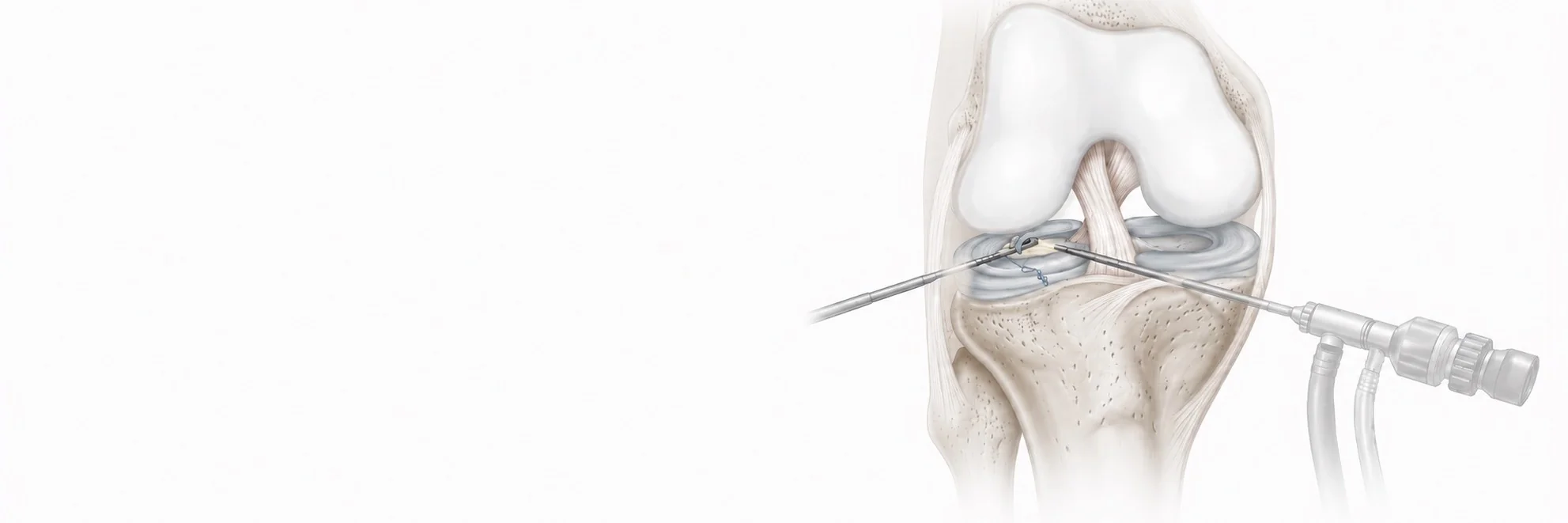
What is knee arthroscopy?
Knee arthroscopy is a minimally invasive surgical technique that allows me to operate inside the knee joint through small incisions (portals), each approximately 5–10 mm long. A specialised camera (the arthroscope) provides a clear, magnified view of the joint, while specialised precision instruments are used to perform the procedure.
It is one of the most common orthopaedic operations worldwide and the platform for a wide range of procedures, from meniscus repair to ligament reconstruction to cartilage treatment.
When is knee arthroscopy needed?
Common indications include:
- meniscus tears requiring repair or selective resection
- ACL or other ligament reconstruction
- cartilage lesions suitable for microfracture or cartilage restoration
- loose bodies inside the joint
- symptomatic plica syndrome
- arthrofibrosis (scar tissue release)
- biopsy or treatment of synovial pathology
How is the operation performed?
A typical knee arthroscopy involves:
- general or regional anaesthesia
- two or three small portals around the kneecap
- systematic diagnostic inspection of all joint compartments
- the specific therapeutic procedure required (meniscus surgery, ligament work, cartilage treatment)
- closure with a few sutures and a sterile dressing
What should the patient expect after surgery?
Recovery depends on the specific procedure performed:
- almost all knee arthroscopies are performed as day cases
- after simple diagnostic arthroscopy or partial meniscectomy: walking with full weight-bearing within days
- after meniscus repair or ACL reconstruction: protected weight-bearing for several weeks
- physiotherapy begins early in all cases
- return to work and daily activities is matched to the specific procedure
What is the long-term outcome?
Outcomes depend almost entirely on the procedure performed arthroscopically, not on the arthroscopy itself. Specific procedures are discussed in detail on their respective service pages.