

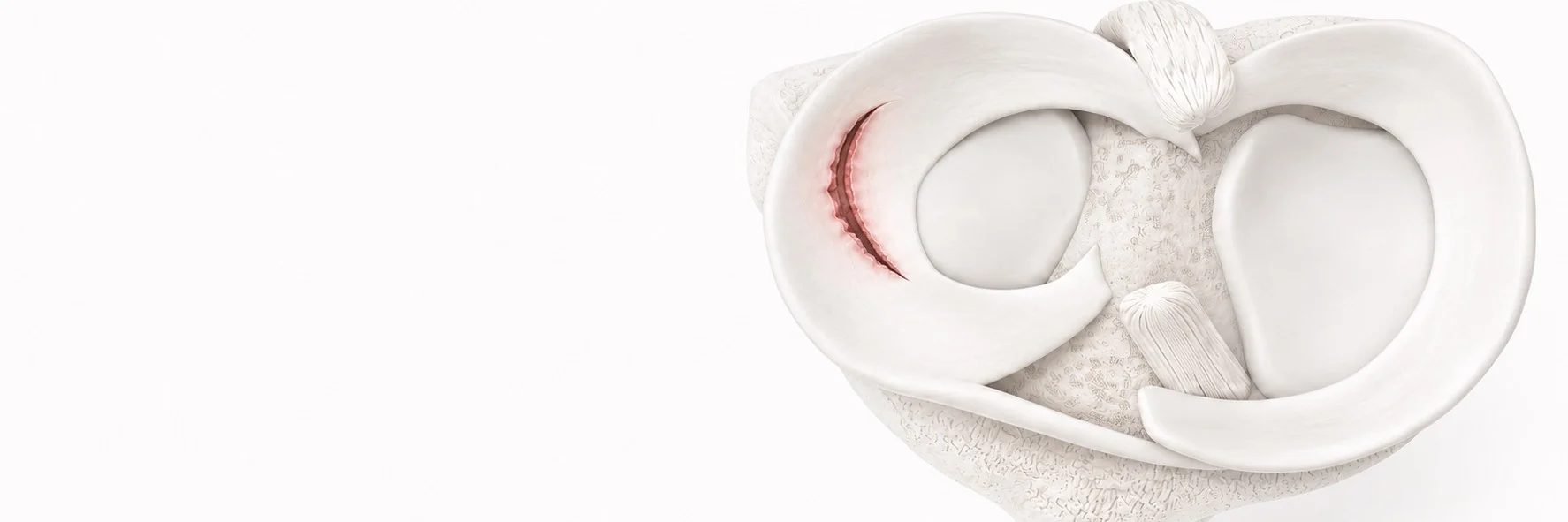
What is a meniscus tear?
Each knee has two menisci, the medial and lateral, which are C-shaped pads of fibrocartilage that sit between the femur and the tibia. They distribute load across the joint, absorb shock, and contribute to stability and joint nutrition.
A meniscus tear is a disruption of this critical structure, among the most common knee injuries and an important cause of pain, mechanical symptoms and progression of osteoarthritis.
What causes a meniscus tear?
Meniscus tears typically occur from:
- twisting or pivoting injuries with the foot planted (often during sports)
- deep squatting or kneeling under load
- sudden cutting movements
- degeneration of the meniscus tissue with age
In younger patients, tears are usually traumatic. In older patients, tears more often occur in the setting of pre-existing degenerative change, sometimes with minimal trauma.
What are the symptoms?
- pain along the joint line, typically medial or lateral
- swelling, often appearing within the first 24 hours
- clicking, catching or locking of the knee
- difficulty fully bending or straightening the knee
- pain with twisting, squatting or pivoting movements
- a sense of giving way in some cases
What types of meniscus tears exist?
Tears are classified by their pattern and location, which dictate whether repair is possible:
- longitudinal and bucket-handle tears, often repairable, especially in the well-vascularised peripheral zone
- radial tears, disrupt the meniscus structure significantly, repair is challenging but increasingly attempted
- horizontal and complex tears, often degenerative in nature, more often treated with selective debridement
- root tears, disrupt the meniscus attachment to the tibia, biomechanically equivalent to total meniscectomy and increasingly recognised as repairable
How is the diagnosis made?
- clinical examination, including specific provocation tests (McMurray, Apley, joint-line tenderness)
- X-rays, to assess the joint, exclude associated bony injuries and evaluate for arthritis
- MRI, the gold standard for confirming the tear pattern, location and any associated injuries
Identifying the exact tear pattern is essential for treatment planning, particularly when assessing whether repair is feasible.
What is the conservative treatment?
Many small or degenerative tears respond to non-surgical treatment:
- activity modification and temporary load reduction
- anti-inflammatory medication when appropriate
- structured physiotherapy focused on quadriceps strength and joint biomechanics
- Molecular & Biological Regenerative Therapy (PRP) in selected cases
A 6–12 week trial is often appropriate before considering surgery, particularly in the absence of mechanical locking.
When is surgery recommended?
Surgical treatment is generally recommended when:
- mechanical symptoms (locking, catching) are present
- the tear is repairable and the patient is young or active
- symptoms persist despite a structured period of conservative treatment
- the tear coexists with another injury that needs surgery (e.g., ACL tear)
How is meniscus surgery performed?
Meniscus surgery is performed arthroscopically through small incisions. There are two main approaches:
For repairable tears, sutures are placed across the tear to compress the edges together and allow biological healing. Modern all-inside systems make this technically reliable. Repair preserves the full functional surface of the meniscus and is the preferred option whenever feasible.
For tears that cannot be repaired (typically degenerative or complex tears), the torn fragments are removed selectively while preserving as much healthy meniscus as possible. The aim is to relieve mechanical symptoms while maintaining the joint protection that the remaining meniscus provides.
What should the patient expect after surgery?
- most procedures are performed as a day case
- after meniscectomy, weight-bearing and activity progress quickly, often within days
- after meniscus repair, weight-bearing and deep knee flexion are restricted for 6 weeks to protect the repair
- physiotherapy begins early in both cases, focused on swelling control and quadriceps activation
- return to sport: typically 6–8 weeks after meniscectomy, 4–5 months after meniscus repair
What is the long-term outcome?
Outcomes after meniscus surgery are generally very good when the right procedure is matched to the right tear pattern. Repair, when successful, restores full meniscus function and is biomechanically the best option for the joint long-term.