

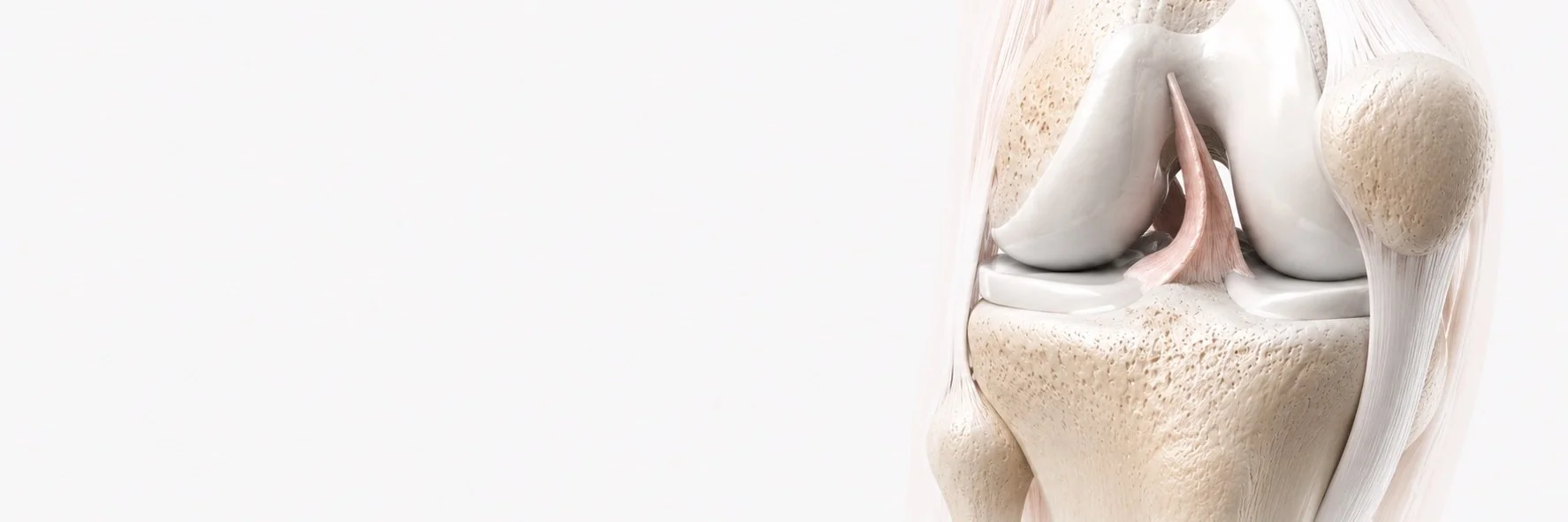
What is plica syndrome?
A plica is a remnant of fetal connective tissue inside the knee joint. Most people have one or more plicae and never know it, they cause no problems. In some patients, however, a plica becomes thickened, inflamed and irritated, often after a minor injury or repeated overuse. When this happens, the plica can rub against the cartilage and produce a recognisable pattern of pain and clicking known as plica syndrome.
What causes plica syndrome?
- direct trauma to the knee
- repetitive overuse, particularly cycling, running, prolonged squatting
- post-surgical inflammation
- any cause of chronic synovitis
The medial plica is by far the most commonly symptomatic.
What are the symptoms?
- pain on the inner side of the knee, around the medial border of the patella
- clicking or snapping with movement, often reproducible at a specific angle of flexion
- pain with prolonged sitting ("theatre sign")
- pain with stairs and squatting
- occasional swelling
Plica syndrome is often confused with meniscus tears or patellofemoral pain, careful clinical examination is essential.
How is the diagnosis made?
- detailed history and clinical examination, including the medial plica test
- exclusion of other diagnoses (meniscus tear, MCL injury, patellofemoral pain)
- MRI, can sometimes visualise a thickened plica, but is more useful for excluding other pathology
- the diagnosis is often confirmed at arthroscopy
What is the conservative treatment?
The vast majority of patients improve with conservative treatment:
- activity modification, particularly avoiding prolonged squatting and repetitive flexion
- anti-inflammatory medication
- structured physiotherapy with quadriceps strengthening and stretching
- ultrasound-guided injection in selected resistant cases
It is worth being clear that a properly conducted conservative programme of at least 3 months should be tried before considering surgery.
When is surgery recommended?
Surgery is reserved for the small minority of patients with persistent, well-localised symptoms despite a properly conducted conservative programme.
How is surgical treatment performed?
Surgery is performed arthroscopically. During the procedure I excise the symptomatic plica, removing the inflamed, thickened tissue while preserving the surrounding healthy joint. The procedure is minimally invasive and gives excellent results in well-selected patients. I apply modern arthroscopic techniques aiming for stable repair and optimal functional recovery.
What should the patient expect after surgery?
- day-case admission
- weight-bearing as tolerated from the first day
- early structured physiotherapy
- return to running typically at 4–6 weeks
- return to full sport at 6–8 weeks