

What is rotator cuff repair?
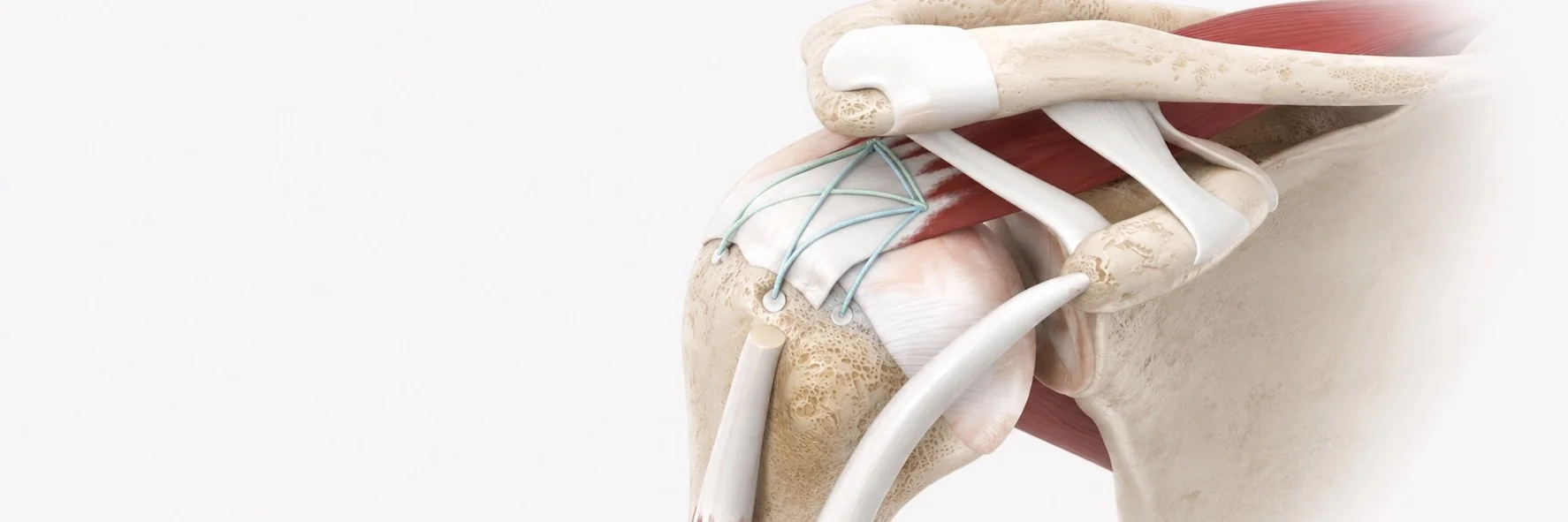
Rotator cuff repair is the surgical reattachment of a torn rotator cuff tendon back to its bony insertion on the humerus. The aim is to restore the integrity of the tendon, relieve pain and restore strength and function to the shoulder.
I perform the operation arthroscopically through small incisions, using suture anchors, small implants that fix the tendon to the bone with high-strength surgical sutures.
When is rotator cuff repair needed?
Repair is recommended for:
- younger, active patients with high functional demands
- larger or complete tears
- tears with persistent pain or weakness despite conservative treatment
- acute traumatic tears, particularly in patients who would benefit from early repair
How is the operation performed?
I perform arthroscopic rotator cuff repair through 3–4 small portals around the shoulder. The procedure includes:
- identifying and assessing the tear
- preparing the bony tendon insertion site
- placing suture anchors into the bone (typically a "double-row" or "transosseous equivalent" configuration for medium and larger tears)
- reattaching the tendon to the bone with the sutures, achieving a stable and anatomical repair
- addressing any associated shoulder pathology, biceps tendon, labrum, acromial impingement
What should the patient expect after surgery?
- the procedure is most commonly performed as day-case surgery
- a shoulder sling is worn for 4–6 weeks to protect the repair
- passive physiotherapy starts within the first days
- active and resistance exercises are introduced gradually from around 6 weeks
- driving usually resumes when the sling is off, typically 6 weeks
- return to office-based work at 6–8 weeks; return to manual work at 4–6 months
- return to overhead sports at 4–6 months, depending on tear size
How important is rehabilitation?
Rehabilitation is a critical part of the operation. The repair must be protected for the first 6 weeks while the tendon heals biologically. Excessive early loading can lead to retear; being too cautious can cause stiffness. Appropriate physiotherapy is what maintains this balance.
A typical programme:
- weeks 0–6: sling wear, passive range of motion only, no active lifting
- weeks 6–12: active assisted, then active range of motion; gradual elimination of sling
- weeks 12–16: progressive strengthening
- months 4–6: return-to-sport progression
What is the long-term outcome?
Most patients regain a strong, well-functioning and stable shoulder:
- pain relief is achieved in 85–95% of patients
- strength gradually returns over 6–12 months
- tendon healing rates are 70–95% depending on tear size and tissue quality
- most patients return to their previous activities, including overhead sporting activities