

What are biceps tenodesis and SLAP repair?
These are two related operations that address pathology at the top of the shoulder where the biceps tendon meets the labrum (the fibrocartilaginous rim around the socket).
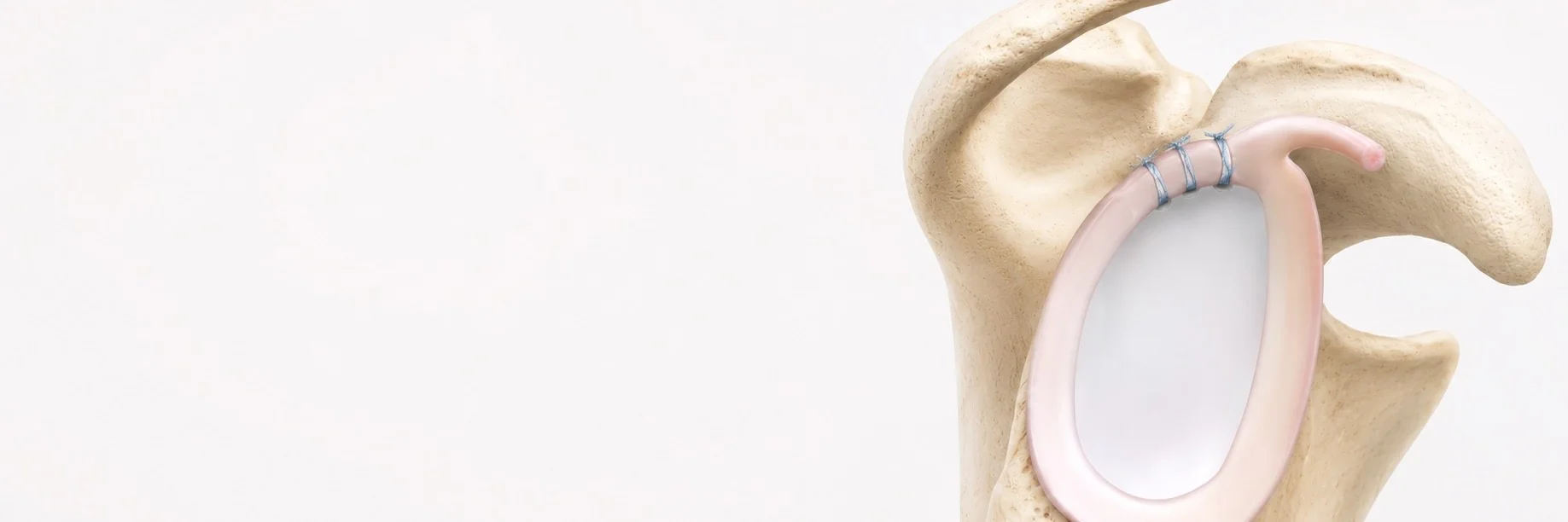
A SLAP lesion is a tear of the upper labrum at the biceps anchor. Biceps tenodesis detaches the biceps tendon from the labrum and reattaches it lower down on the humerus, removing the painful structure from the joint entirely. SLAP repair, by contrast, sews the torn labrum back together while preserving the native biceps anchor.
When are these operations needed?
Surgery is considered when:
- symptoms persist despite an appropriately structured course of conservative treatment
- imaging confirms a SLAP lesion or significant biceps pathology
- mechanical symptoms such as clicking or catching are present
- the patient is functionally limited and motivated to undergo rehabilitation and recovery
Biceps Tenodesis
In biceps tenodesis, the biceps tendon is detached from its attachment at the top of the shoulder and reattached to the upper humerus using a suture anchor or interference screw. This eliminates the painful structure entirely while preserving muscle function and cosmetic appearance.
The procedure is technically reliable, with predictable recovery and a low complication rates. It is the operation I most often perform for symptomatic biceps and SLAP pathology in adult patients.
SLAP Repair
Arthroscopic SLAP repair reattaches the torn labrum to the rim of the glenoid using suture anchors. The biceps anchor is preserved. The procedure is best suited to younger overhead athletes (typically under 30) with traumatic, repairable SLAP lesions and good-quality labral tissue.
What should the patient expect after surgery?
- both procedures are typically performed as day-case surgery
- a sling is worn for 4 weeks (tenodesis) to 6 weeks (SLAP repair)
- physiotherapy usually starts within the first postoperative week
- return to office-based work at 4–6 weeks
- return to overhead sporting activities at 4–6 months depending on the procedure
What is the long-term outcome?
Outcomes are generally reliable for both procedures when the indication is correct:
- biceps tenodesis: 85–95% satisfaction at 5 years, low revision rates
- SLAP repair: 70–85% satisfaction at 5 years, particularly in young athletes involved in overhead sports
- most patients successfully return to their previous activities