

What is total hip replacement?
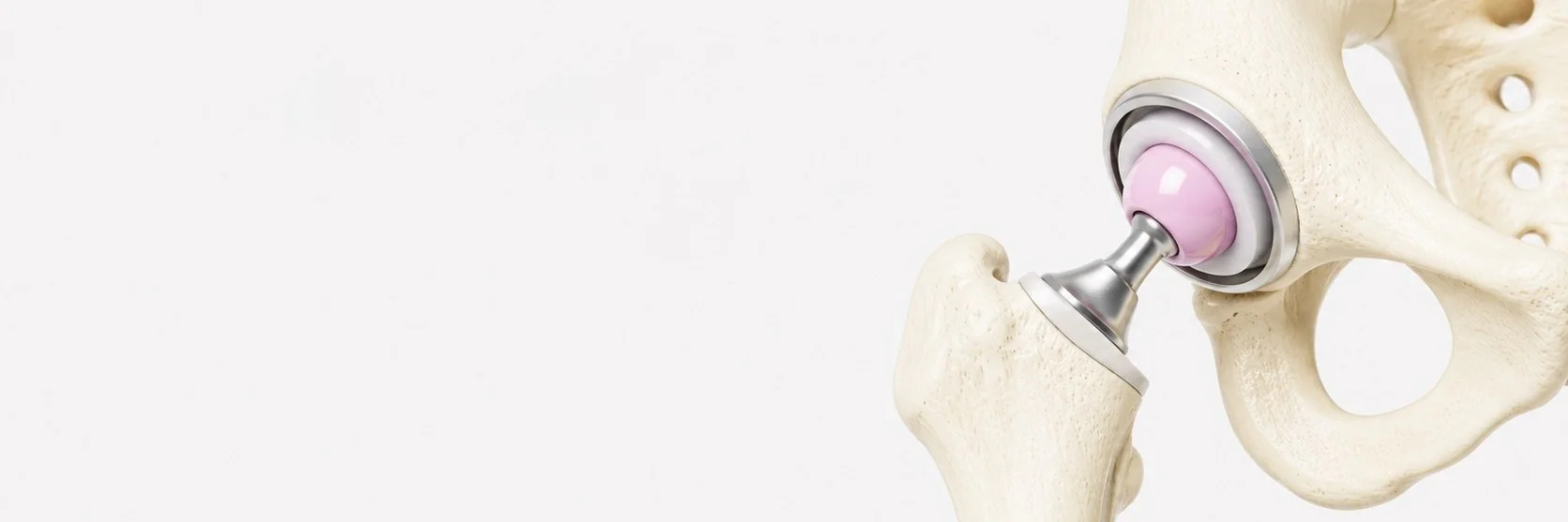
Total hip replacement is one of the most successful operations in modern medicine, often described as the operation of the 20th century. The damaged head of the femur is replaced with a femoral stem and ceramic head, and the worn acetabulum is reconstructed with a metal acetabular cup containing a smooth polyethylene bearing surface.
The operation reliably eliminates pain and restores mobility and function in patients with end-stage hip joint disease.
When is total hip replacement needed?
- advanced osteoarthritis with severe pain not controlled by conservative measures
- avascular necrosis of the femoral head with collapse
- rheumatoid arthritis and other inflammatory joint diseases
- post-traumatic arthritis after a hip injury
- displaced femoral neck fractures in older patients
- failure of previous joint-preserving procedures
How is the operation performed?
I perform total hip replacement using modern, anatomically-shaped implants and a minimally invasive surgical approach, selected according to the patient’s anatomy, bone quality, and underlying pathology. The minimally invasive technique respects the muscles and tendons around the hip, reduces blood loss and post-operative pain, and supports earlier mobilisation and recovery. The damaged surfaces are removed and replaced with implants designed to recreate the normal anatomy of the hip, restoring leg length, offset, stability, and alignment.
What types of implants are used?
- the femoral component, most commonly an uncemented titanium stem, with a ceramic head
- the acetabular component, most commonly an uncemented metal cup containing a polyethylene liner
- modern ceramic-on-polyethylene bearing surfaces provide low wear characteristics and excellent long-term durability
- implant choice is individualised based on patient age, activity, bone quality and anatomy
What should the patient expect after surgery?
- hospital stay of 2–4 days in most cases
- early mobilisation with physiotherapy from the first post-operative day
- use of crutches typically for 2–4 weeks
- blood clot prevention with anticoagulants for 5 weeks after surgery
- wound care and review at 2 weeks
What is the recovery like?
- weeks 0–2: walking with crutches, basic exercises, gradual recovery from surgery
- weeks 2–6: progressive weight-bearing, increasing activity at home
- weeks 6–12: most patients return to driving, light work, swimming, cycling
- 3–6 months: gradual return to full activities, including most sports
Modern hip replacements are designed to last 20 years or more in the great majority of patients. High-impact and very high-demand sporting activities are generally discouraged after hip replacement, but most recreational, fitness, and lifestyle activities are well tolerated.
What is the long-term outcome?
Total hip replacement has outstanding outcomes:
- patient satisfaction rates routinely exceed 90%
- 15-year implant survivorship rates is over 95% in most national registries
- many modern implants now last 25 years or more, particularly in patients over 60 at the time of surgery