

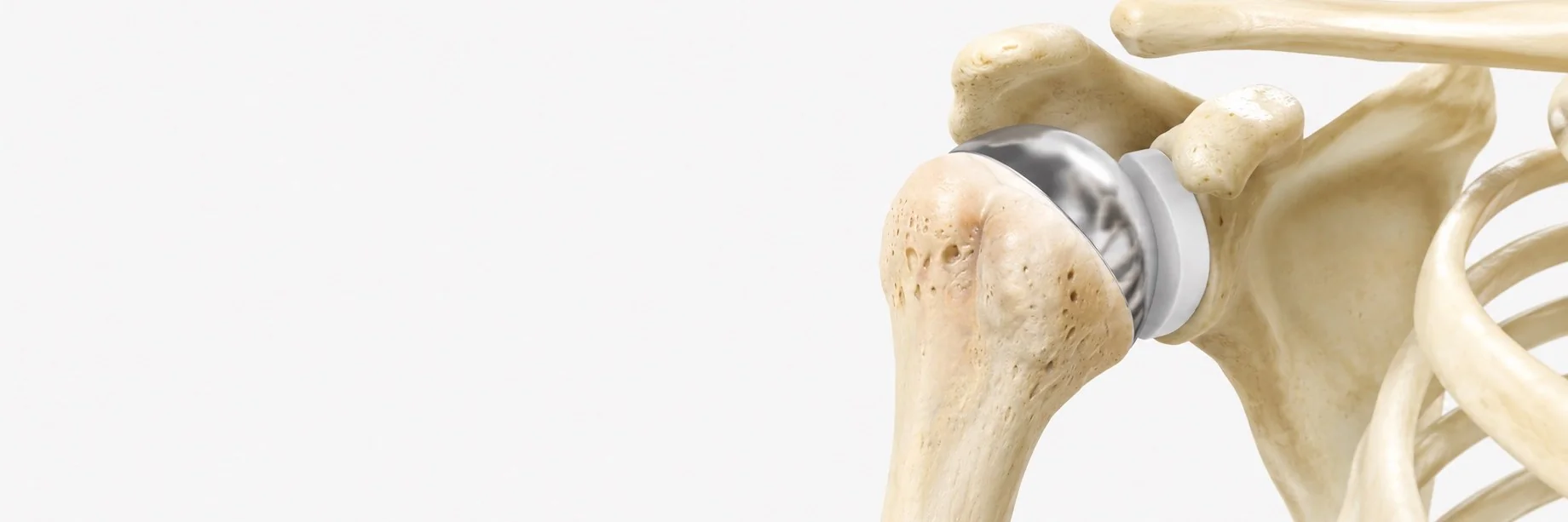
What is anatomic total shoulder replacement?
Anatomic total shoulder replacement is the surgical replacement of both surfaces of the shoulder joint with prosthetic components, designed to recreate the native anatomy of the shoulder. The damaged head of the humerus is replaced with a metal stem and ball, while the worn glenoid surface (the socket) is resurfaced with a polyethylene component.
The procedure preserves the natural ball-and-socket geometry of the shoulder, allowing near-normal shoulder mechanics and excellent range of motion when the rotator cuff is intact.
When is anatomic replacement needed?
Anatomic replacement is recommended when:
- shoulder osteoarthritis is advanced and pain is no longer controlled by conservative treatment
- inflammatory arthritis such as rheumatoid arthritis has destroyed the joint surfaces
- avascular necrosis of the humeral head with collapse
- the rotator cuff is intact and well-functioning
- glenoid bone stock is sufficient to support a glenoid component
How is the operation performed?
I perform anatomic total shoulder replacement through a carefully planned incision at the front of the shoulder. The procedure includes:
- careful exposure protecting the deltoid and rotator cuff
- precise resection of the worn humeral head
- preparation of the humeral canal for implantation and insertion of the stemmed prosthesis
- preparation of the glenoid surface and fixation of the glenoid component
- soft-tissue balancing and restoration of joint mechanics
What should the patient expect after surgery?
- hospital stay of 2–3 days
- a sling is worn for 4–6 weeks
- passive physiotherapy starts within the first days
- active and resistance exercises are usually introduced from around 6 weeks
- driving usually resumes at 6–8 weeks
- return to most daily activities by 3–4 months
- high-impact and repetitive overhead sports are generally discouraged
What is the long-term outcome?
Anatomic total shoulder replacement has excellent and well-documented long-term outcomes:
- patient satisfaction routinely exceeds 90%
- 15-year implant survivorship over 90% in modern series
- reliable pain relief and substantial restoration of shoulder function
- most patients regain near-normal range of motion