

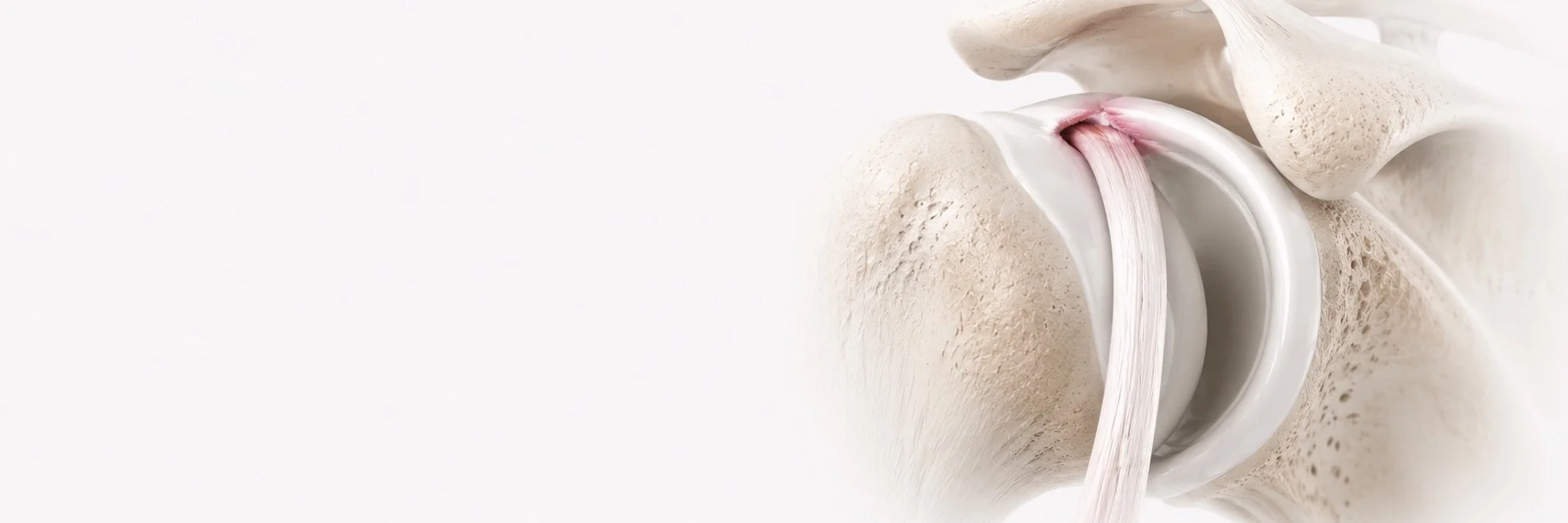
What is a SLAP lesion?
A SLAP lesion (Superior Labrum Anterior to Posterior) is a tear of the superior part of the glenoid labrum, the rim of fibrocartilage that surrounds and stabilises the shoulder joint. This area also serves as the attachment point of the long head of the biceps tendon, which is why SLAP lesions and biceps tendon problems often occur together.
What causes a SLAP lesion?
- acute trauma, most commonly a fall on an outstretched arm
- sudden traction or pulling injuries to the arm
- repetitive overhead loading (throwing, swimming, weightlifting)
- degenerative changes with age
These injuries are particularly common in athletes performing repetitive overhead movements.
What are the symptoms?
- deep, often poorly-localised shoulder pain
- pain during overhead or throwing movements
- clicking, popping or catching sensation
- weakness or fatigue of the shoulder, especially in athletes
- a vague feeling of instability
Symptoms often develop gradually and can be difficult for the patient to localise precisely.
How is a SLAP lesion diagnosed?
Diagnosis is based on:
- clinical history and examination
- specific provocation tests (O'Brien, biceps load tests)
- MRI, ideally MR arthrogram for higher diagnostic accuracy
- in some cases, the diagnosis is confirmed at arthroscopy
What is the conservative treatment?
Initial treatment is usually conservative, particularly in less severe cases:
- rest and activity modification
- anti-inflammatory medication
- Molecular & Biological Regenerative Therapy (PRP) in selected cases of biceps tendinopathy
- structured physiotherapy to restore stability and rotator cuff function
From my training, early treatment can improve symptom control and reduce the likelihood that surgery will be needed.
When is surgery considered?
Surgery is considered when:
- symptoms persist despite a properly conducted conservative programme
- there is significant functional limitation, particularly in athletes
- the lesion is associated with frank instability or significant biceps pathology
How is surgery performed?
Surgery is performed arthroscopically through small incisions, allowing precise visualisation of the joint. Depending on the type of lesion, during the procedure I perform:
- debridement of the damaged tissue in degenerative or fraying lesions
- labral repair using suture anchors when the labrum is detached and the patient is younger and active
- treatment of associated rotator cuff or capsular pathology
I apply modern arthroscopic techniques aiming for stable repair, minimal tissue damage and the fastest possible functional recovery.
What is biceps tenodesis and when is it used?
In selected cases, typically degenerative SLAP lesions, older patients, and any case with significant biceps tendon involvement, I perform tenodesis of the long head of the biceps tendon. The technique:
- releases the tendon from its damaged attachment within the joint
- fixes it securely in a new, healthier position on the humerus
The aim is to reduce pain, eliminate traction on the labrum and improve overall shoulder function. Biceps tenodesis is a reliable solution, particularly when an effective labral repair is unlikely.
What should the patient expect after surgery?
- short hospital stay, usually one night
- immobilisation in a sling for 4–6 weeks depending on the procedure
- guided physiotherapy with progressive return of motion
- return to sport typically at 4–6 months, depending on recovery