

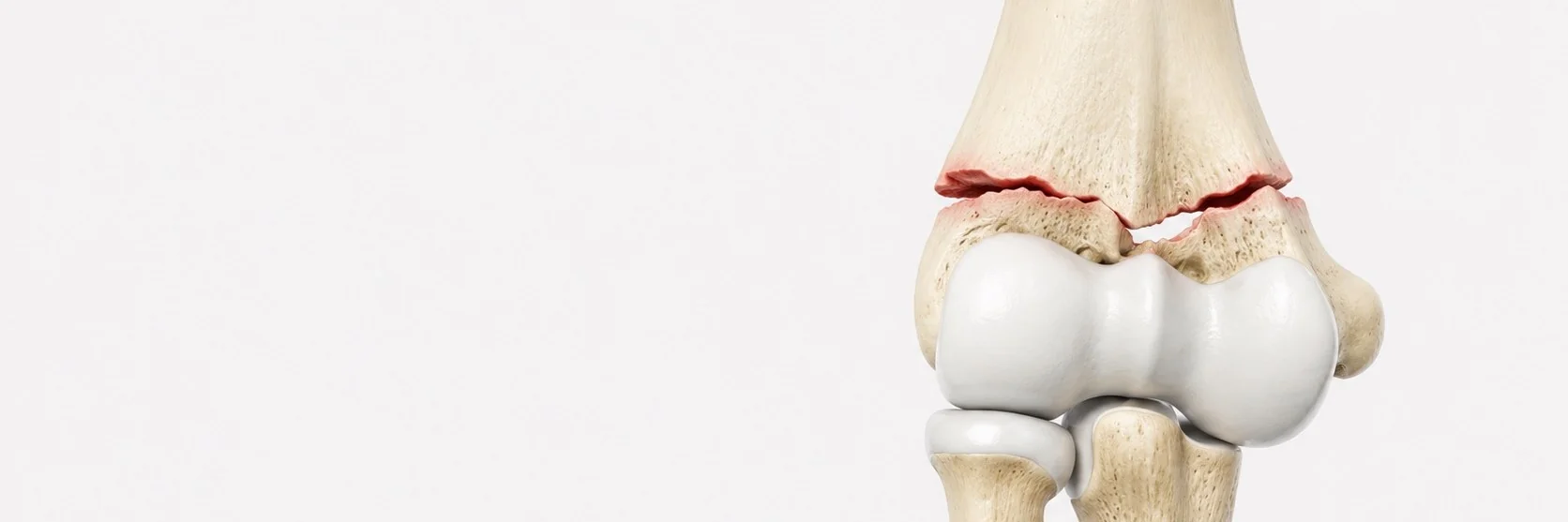
What is a distal humerus fracture?
A distal humerus fracture is a break at the lower end of the humerus, where the bone forms the upper half of the elbow joint. These fractures often involve the joint surface itself, which makes them more demanding than fractures of the shaft, anatomical reduction is essential to restore a smoothly moving elbow.
The patterns include supracondylar fractures (above the joint surface), transcondylar fractures (running through the condyles, typical in elderly patients with osteoporotic bone), and intra-articular bicondylar (T- or Y-pattern) fractures that split the joint surface in two planes. In adults, the great majority of displaced distal humerus fractures are treated surgically, the elbow is unforgiving of malunion or prolonged immobilisation.
What causes a distal humerus fracture?
- low-energy falls onto a flexed elbow in older adults with osteoporosis (the most common pattern, often producing a transcondylar fracture)
- high-energy trauma in younger patients, road traffic accidents, falls from height, sport
- direct blow to the elbow
- fall onto an outstretched hand with the elbow locked in extension
- elbow dislocation with associated fracture of the distal humerus
What are the symptoms?
- severe pain in the elbow immediately after the injury
- rapid swelling and bruising around the elbow joint
- inability to move or straighten the elbow
- visible deformity in displaced fractures, sometimes with shortening of the upper arm
- numbness or tingling in the hand if the ulnar nerve is involved
- the arm is typically held protectively against the body
How is the diagnosis made?
- clinical history and examination, with careful assessment of the neurovascular status of the forearm and hand, particularly the ulnar nerve
- X-rays of the elbow in multiple views, usually diagnostic of the fracture pattern
- CT scan with three-dimensional reconstruction in displaced or intra-articular patterns, essential for preoperative planning
- traction X-rays in selected cases to better define joint surface involvement
How are these fractures classified?
Distal humerus fractures are most commonly classified using the AO/OTA system, which groups them into three types: type A (extra-articular, including supracondylar and transcondylar), type B (single-column intra-articular) and type C (full intra-articular bicondylar, T- or Y-patterns that split both columns and the joint surface). Type C fractures are the most demanding to treat and require precise articular reconstruction followed by stable column fixation.
What is the conservative treatment?
Conservative treatment is reserved for a small minority of distal humerus fractures, specifically undisplaced or impacted fractures in patients where the fragments will hold position without surgical fixation. The protocol typically involves:
- a removable splint or brace for short-term comfort
- early supervised range-of-motion exercises within the first 1–2 weeks to prevent stiffness
- progressive physiotherapy as pain allows
- regular X-ray review to confirm healing and rule out late displacement
The key principle is that prolonged immobilisation of the elbow produces stiffness that is very difficult to recover, so even non-operative treatment requires early, controlled motion.
When is surgery required?
Surgery is the standard treatment for almost all displaced distal humerus fractures in adults. Specific indications include:
- any displaced intra-articular fracture (T-, Y- or single-column patterns)
- displaced supracondylar fractures with angulation or shortening
- transcondylar fractures in elderly patients where fixation allows early motion
- open fractures or those with neurovascular compromise (the ulnar nerve runs immediately behind the medial condyle and is at risk)
- fractures associated with elbow dislocation
What are the surgical options?
The principles of surgical treatment are anatomical reduction of the joint surface and stable fixation strong enough to allow movement on the first or second postoperative day:
- open reduction and internal fixation (ORIF) with dual locking plates (one on the medial column, one on the lateral), the standard contemporary technique, providing the strongest mechanical construct available
- posterior surgical approach, often with an olecranon osteotomy for full exposure of the joint surface in intra-articular patterns
- protection and gentle mobilisation of the ulnar nerve as part of the procedure
- screw fixation of the articular fragments first, reconstructing the joint surface as a single block before fixing the columns to the shaft
I apply modern surgical techniques aiming for anatomical articular reduction and stable dual-plate fixation that respects the soft tissues and supports immediate rehabilitation.
What should the patient expect after surgery?
- hospital stay of typically 2–3 days
- the elbow is supported in a sling for comfort, but active motion typically begins on the first or second day, early movement is essential to prevent stiffness
- structured physiotherapy for several months to regain a functional range of motion
- return to driving at 6–8 weeks once motion is functional
- return to manual work and most activities by 3–4 months
- final functional gains can continue for up to 12 months
Stiffness is the main long-term challenge after distal humerus surgery, much more than nonunion. The fixation is built specifically to allow movement on day one, and the patient's commitment to physiotherapy in the first weeks largely determines the long-term result.