

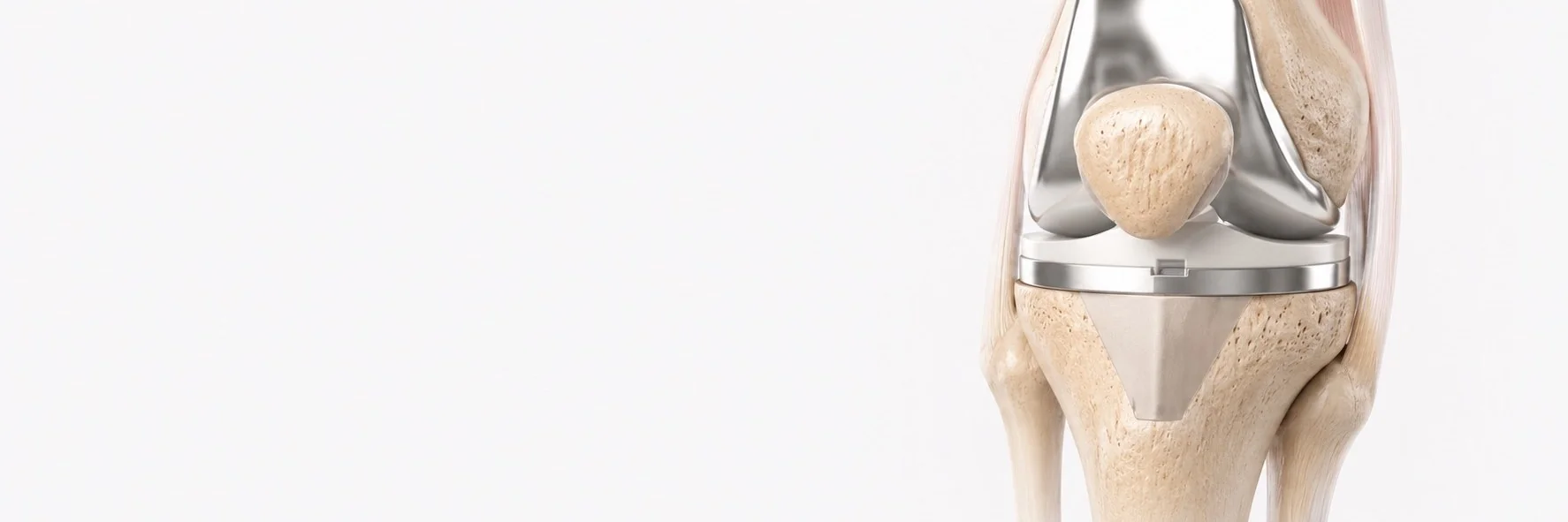
What is revision knee replacement?
Revision knee replacement is the procedure performed when a previous knee replacement has failed or is causing persistent symptoms or mechanical problems. It involves removing the failed components and replacing them with new implants, often more constrained or more complex revision implants designed to deal with the bone loss, soft tissue insufficiency or instability that caused the original replacement to fail.
Revision surgery is considerably more demanding than primary knee replacement. It requires careful preoperative work-up to identify the cause of failure, modern revision implant systems, and meticulous surgical technique and planning.
Why does a knee replacement fail?
There are several possible causes of failure:
- infection, one of the most serious causes of failure, often requiring staged surgery
- aseptic loosening, gradual loss of fixation between the implant and the bone
- polyethylene wear associated with osteolysis
- instability, usually due to ligament imbalance or implant malposition
- stiffness or persistent pain
- periprosthetic fracture, a fracture around the implant
- extensor mechanism problems
- patellofemoral maltracking
Identifying the exact cause of failure is the most important step, revision surgery without a clearly established diagnosis carries a substantially higher risk of failure.
How is the cause of failure identified?
I follow a structured diagnostic pathway:
- thorough clinical history and examination
- radiographs, including weight-bearing views and stress views
- blood tests including inflammatory markers
- joint aspiration to exclude periprosthetic infection in any unexplained painful total knee replacement
- CT imaging to assess implant position, bone loss and rotational alignment
- specialised imaging studies such as bone scan or SPECT-CT in selected cases
Infection must be excluded systematically before any revision surgery is planned, because the treatment strategy for an infected revision is fundamentally different from that for a mechanical revision.
How is the operation performed?
Revision surgery is highly individualised and depends on the cause of failure. The general principles are:
- removal of the failed components while preserving as much bone as possible
- meticulous debridement of all soft tissue scar and any infected or non-viable material
- reconstruction of bone defects with bone graft, augments or specialised metaphyseal cones or sleeves
- implantation of revision components with stems extending into the femur and tibia for additional implant fixation
- use of more constrained implants where ligament stability is compromised
- in cases of infection, a two-stage protocol with an antibiotic-loaded cement spacer in the first stage and definitive revision implants in the second
I apply modern surgical techniques aiming for stable and accurately positioned revision implants, restoration of soft tissue balance and the best possible functional outcome for the patient.
What should the patient expect?
- longer hospital stay compared with primary knee replacement, typically 4–7 days
- more cautious early rehabilitation, particularly with extensive fixation or bone reconstruction
- structured physiotherapy with progressive weight-bearing, mobilisation and strengthening
- longer overall recovery, typically 6–12 months to reach maximum function
- outcomes are generally good but less predictable than those of primary knee replacement
An important point is that revision surgery is technically demanding and carries higher risks than primary knee replacement surgery. The decision to proceed is made carefully and after detailed discussion with the patient about the cause of failure, the proposed revision strategy and the realistic postoperative expectations.