

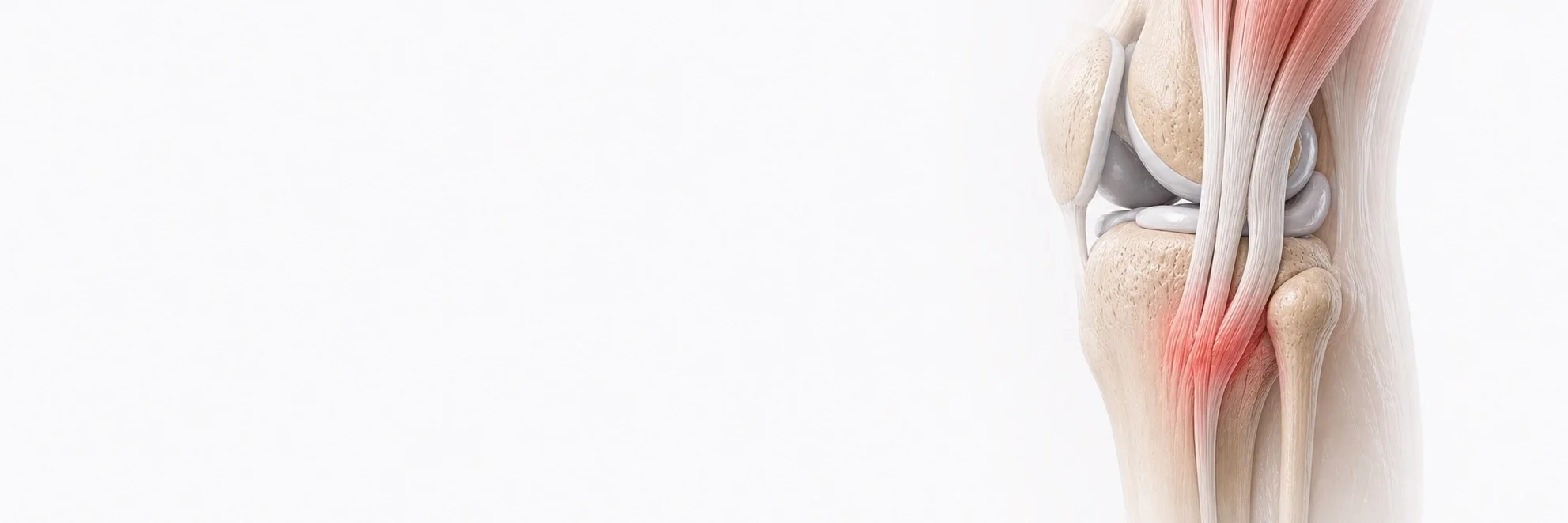
What is pes anserine bursitis?
The pes anserinus ("goose's foot") is the combined insertion of three tendons, sartorius, gracilis and semitendinosus, onto the upper inner side of the tibia, just below the knee. A small bursa (a thin fluid-filled sac) lies between these tendons and the bone, allowing them to glide smoothly.
Pes anserine bursitis is inflammation of this bursa. It causes pain on the inner side of the knee, just below the joint line, and is often mistaken for medial meniscus or MCL pathology.
What causes it?
- overuse, particularly running, cycling, repetitive stair climbing
- sudden increase in training volume
- biomechanical factors, flat feet, knee malalignment, weak gluteal muscles
- underlying knee arthritis (especially medial compartment)
- overweight and inflammatory conditions
What are the symptoms?
- pain on the inner side of the knee, 4–5 cm below the joint line
- tenderness directly over the pes anserine area
- pain worse with stair climbing, running and getting up from a chair
- occasional swelling or warmth over the area
- morning stiffness in some cases
How is it diagnosed?
- clinical examination, the diagnosis is largely based on the location and pattern of tenderness
- ultrasound, confirms inflammation in the bursa
- MRI, used selectively when other knee pathology is suspected
- X-rays to assess for underlying arthritis or alignment issues
I want patients to understand that the diagnosis is largely clinical. The challenge is distinguishing pes anserine bursitis from medial meniscus or MCL pathology, they can present similarly.
How is it treated?
The vast majority of cases respond well to conservative treatment:
- activity modification, reducing the provoking activities for 4–6 weeks
- anti-inflammatory medication when appropriate
- targeted physiotherapy, stretching the hamstrings, strengthening the gluteal and quadriceps muscles
- addressing biomechanical factors, orthotic insoles for flat feet, gait retraining
- ultrasound-guided corticosteroid injection for persistent cases
- addressing any underlying arthritis or malalignment
What matters most is that surgery is almost never indicated for pes anserine bursitis. When symptoms persist despite proper treatment, the cause is usually a missed underlying problem.