

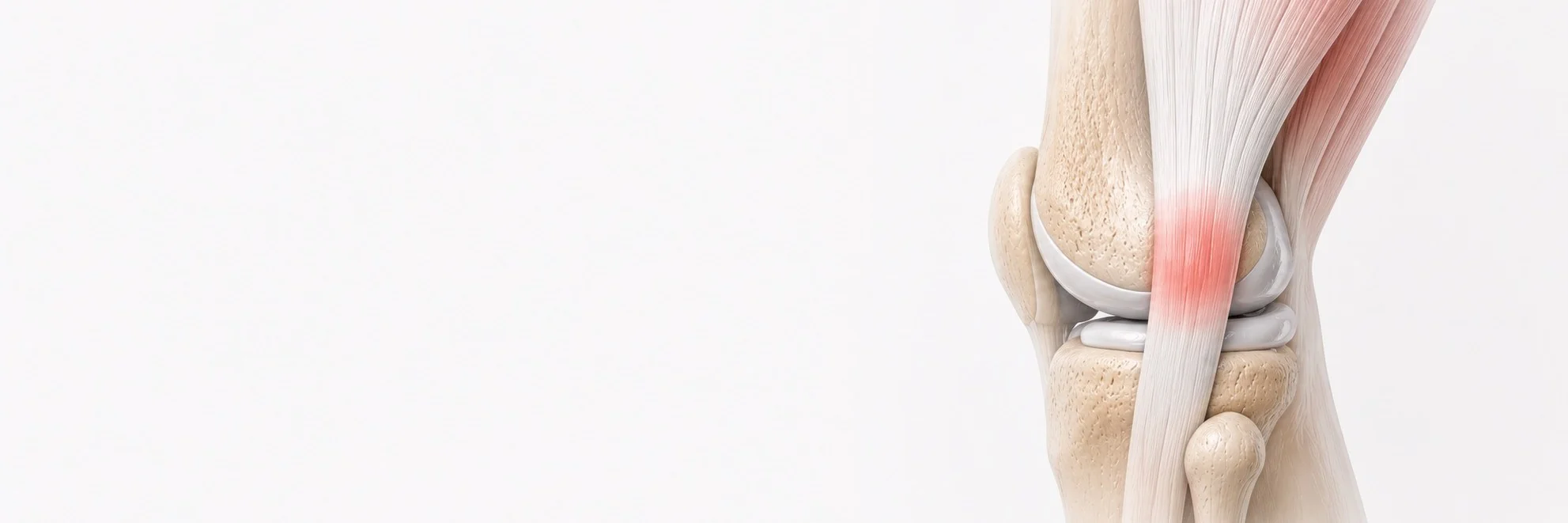
What is ITB syndrome?
The iliotibial band (ITB) is a thick band of connective tissue that runs along the outside of the thigh, from the hip to just below the knee. It plays an important role in stabilising the leg during walking and running.
ITB syndrome is a painful condition caused by friction or compression of the band against the lateral femoral condyle (the outer bony prominence of the knee). It is one of the most common causes of lateral knee pain in runners and cyclists.
What causes it?
- overuse, long-distance running, downhill running, increased training volume
- weakness of the hip abductors, particularly gluteus medius
- biomechanical factors, leg length discrepancy, excessive foot pronation, knee malalignment
- training errors, sudden volume increase, inappropriate running surface, worn shoes
- tight hip flexors and ITB, often combined with weak stabilisers
What are the symptoms?
- sharp or burning pain on the outer side of the knee
- pain that develops at a predictable distance/time during running
- pain often subsides shortly after stopping the activity
- tenderness over the lateral femoral condyle
- occasional snapping or popping sensation with knee flexion
- pain worse with running downhill or descending stairs
How is it diagnosed?
- clinical examination, characteristic tenderness over the lateral femoral condyle
- specific provocation tests (Noble's, Ober's)
- X-rays to exclude other knee pathology
- MRI in selected cases, used to exclude meniscus or LCL pathology
What matters most is that the diagnosis is clinical. The history of activity-related lateral knee pain combined with the typical examination findings is usually enough.
How is it treated?
Almost all cases respond to conservative treatment:
- activity modification, temporary reduction of training volume
- targeted strengthening, particularly of the gluteus medius and hip stabilisers
- progressive loading programme, modern evidence supports active strengthening over passive stretching
- addressing biomechanical contributors, running technique, shoes, surfaces
- anti-inflammatory medication during acute flares
- corticosteroid injection for persistent cases
- surgery, extremely rare, reserved for the small minority who fail comprehensive non-operative care
It is worth being clear that ITB syndrome is fundamentally a biomechanical problem. Addressing the cause, usually weak hip stabilisers and training errors, gives much better results than treating only the symptom.