

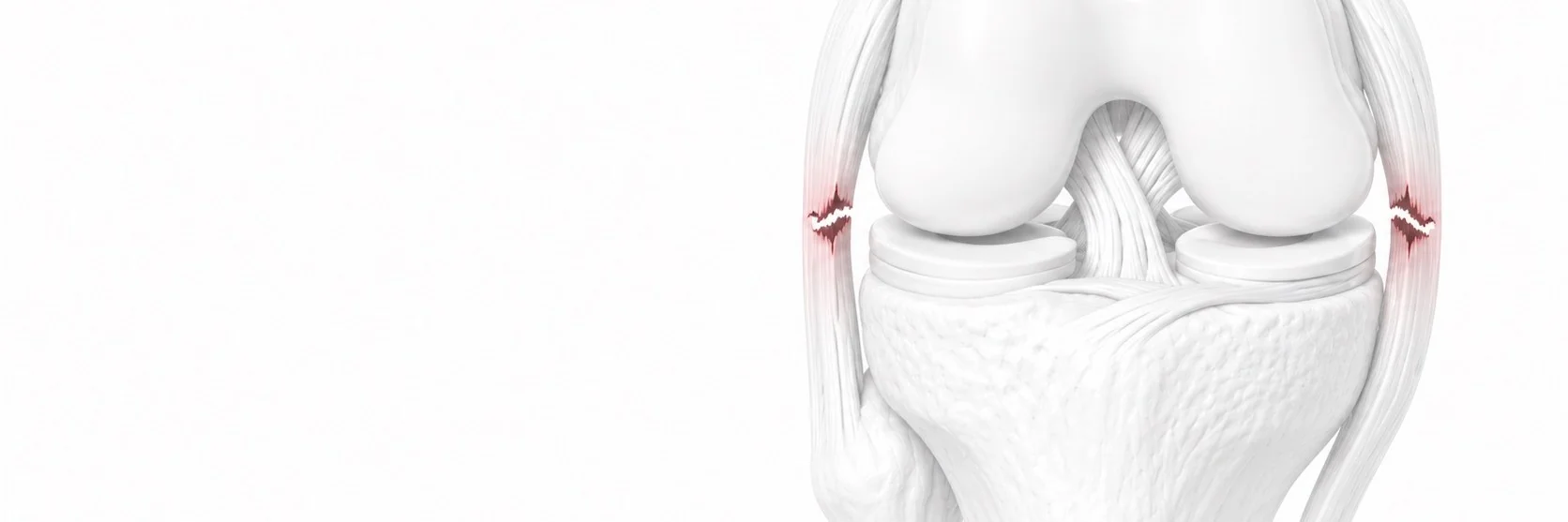
What is an LCL injury?
The lateral collateral ligament (LCL) runs along the outer side of the knee, from the femur to the head of the fibula. It is the primary restraint against varus stress. LCL injuries are far less common than MCL injuries but are clinically important because they often occur as part of a complex posterolateral corner (PLC) injury and, if missed, can lead to chronic instability and failure of other knee surgeries.
What causes an LCL injury?
- a direct blow to the inner side of the knee
- a varus or hyperextension force
- high-energy trauma
- a sporting injury with the foot fixed and an external rotation force
What are the symptoms?
- pain and swelling on the outer side of the knee
- instability, particularly with the knee in extension
- a feeling of the knee "giving way" outwards
- in some cases, peroneal nerve symptoms, numbness or weakness of the foot
- associated symptoms from PLC, ACL or PCL injury when these structures are also involved
How is the diagnosis made?
- clinical examination, varus stress test, dial test for posterolateral rotational instability
- X-rays, including stress views in selected cases
- MRI, essential for assessing the LCL and the entire posterolateral corner
Recognising an LCL/PLC injury is a critical clinical step. Missed PLC injury is one of the major causes of failed ACL or PCL reconstruction.
What is the conservative treatment?
Isolated Grade I and II LCL injuries can be treated non-surgically with bracing and a structured rehabilitation programme.
When is surgery recommended?
Unlike the MCL, the LCL has limited capacity to heal. Surgery is indicated for:
- Grade III LCL injuries (complete tears)
- all posterolateral corner injuries
- multi-ligament knee injuries involving the LCL
- chronic LCL/PLC deficiency
How is surgical treatment performed?
Surgical treatment is performed within 2–3 weeks of injury when possible (acute repair) or with reconstruction in chronic cases. The procedure may involve repair of the LCL, reconstruction with a graft, or combined PLC reconstruction depending on the pattern of injury. I apply modern techniques aiming for stable repair and optimal functional recovery.
What should the patient expect after surgery?
- knee brace for 6 weeks
- protected weight-bearing for 4–6 weeks
- graduated rehabilitation with progressive strengthening
- return to running at 4–6 months and to sport at 9–12 months