

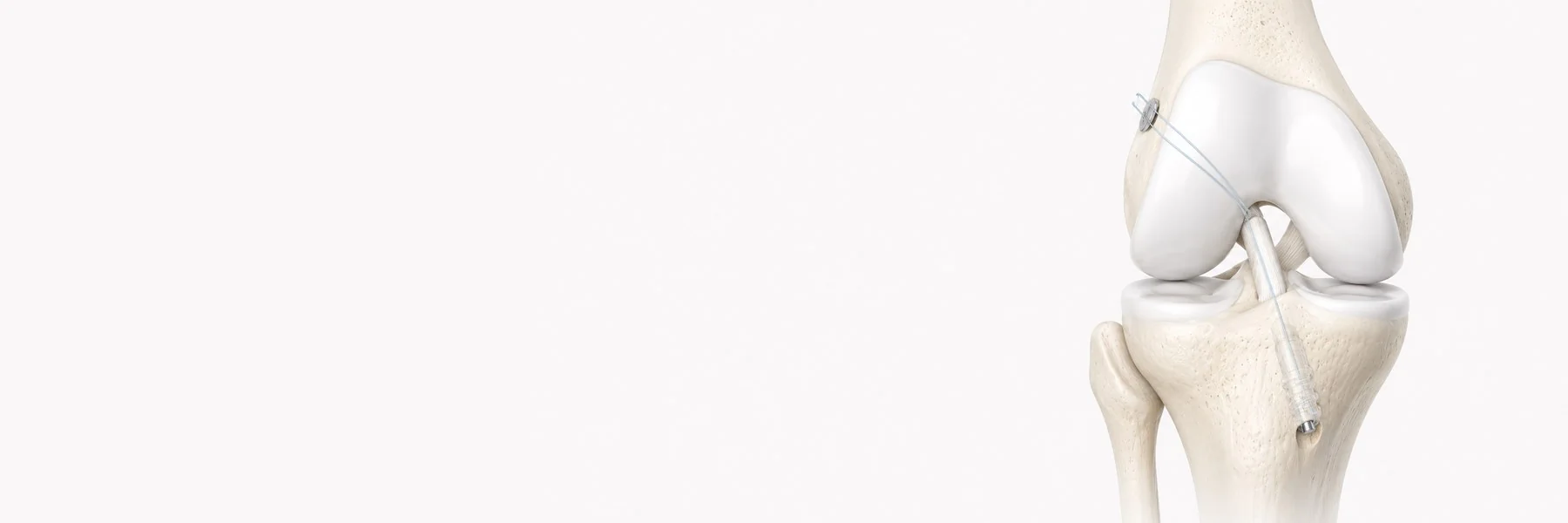

Recovery after ACL reconstruction takes longer than most people expect, and it happens in stages. The first weeks are about calming the knee down. The following months rebuild strength and control. Return to cutting and pivoting sport usually comes at 9 to 12 months, and only once the knee has passed the right tests. Knowing what each stage involves helps you recognise what is normal and stay patient when progress feels slow.
Key points
- Recovery after ACL reconstruction is measured in months. Most people walk without crutches within the first weeks, but a return to pivoting sport usually takes 9 to 12 months.
- The early priorities are a fully straight knee, controlled swelling and switching the thigh muscle back on. Getting these right makes every later stage easier.
- Progress is guided by milestones, not dates: strength, hop tests and quality of movement decide when you move to the next stage.
- Returning to sport before 9 months, or without passing return-to-sport tests, is linked to a markedly higher risk of injuring the knee again.
- Feeling hesitant or anxious about the knee is common, and it is part of recovery too. Tell your physiotherapist and surgeon about it.
Recovery starts before the operation
If there is time before surgery, use it. Current rehabilitation guidelines recommend a "prehabilitation" phase: reducing swelling, regaining full movement and strengthening the thigh muscles before the operation. A knee that goes into surgery calm, straight and strong usually recovers more smoothly afterwards.
This is also the moment to plan practical things: time off work, help at home for the first days, and a physiotherapist you can see regularly for the months ahead.
The first two weeks: calm the knee and get it straight
The operation is usually done as a day case. You go home on crutches, putting as much weight on the leg as is comfortable, unless your surgeon has told you otherwise (for example after an additional meniscus repair).
The priorities in these first days are simple but important:
- Swelling control: rest with the leg elevated, ice or cooling, and compression.
- Full straightening (extension): a knee that stays slightly bent becomes difficult to correct later, so this is a priority from day one.
- Switching the quadriceps back on: the thigh muscle often "switches off" after knee surgery. Simple tightening exercises start straight away.
Some pain, swelling and bruising, sometimes spreading down to the shin and ankle, are normal at this stage.
Weeks 2 to 6: walking normally again
Most people stop using crutches within the first one to two weeks, once they can walk without a limp. The knee gradually bends further, stairs become easier, and everyday tasks return. Driving is usually possible at around four to six weeks, a little later after surgery on the right knee.
Swelling tends to come and go, particularly after a busy day. This is common, and a sign to pace your activity rather than a reason for alarm.
Weeks 6 to 12: building strength and control
With a quiet knee and good movement, rehabilitation shifts to strength and balance. Expect progressive leg exercises, exercise-bike work and balance training. Many people feel almost normal in daily life during this period, and this is exactly when it is easy to underestimate how much recovery remains: the new ligament is still maturing and the muscles are still weaker than on the other side.
Months 3 to 6: running and sport-specific training
Straight-line running usually starts at around three to four months, once strength, movement and swelling allow it. Training then progresses to jumping, landing, and changes of direction, practised under control before they are done at speed.
Your physiotherapist will use measurements rather than the calendar to decide when to progress: how strong the operated leg is compared with the other, how well you hop and land, and the quality of your movement.
Months 6 to 12: returning to sport
This is the stage where the evidence is clearest, and where patience pays off most.
- In one well-known cohort study, the risk of a new knee injury fell substantially for each month that return to demanding sport was delayed, up to about 9 months after surgery.
- In a study of professional athletes, those who returned to sport without meeting all of a set of clinical discharge criteria had about four times the risk of rupturing the new ligament. The cohort above pointed in the same direction.
- Young athletes face the highest risk: in a large review, nearly 1 in 4 athletes under 25 who returned to sport after ACL reconstruction had a second ACL injury, to the same knee or the other one.
Return to sport is therefore not a single day but a gradual process: back to training first, then to sport, then to full performance. Most guidelines advise continuing rehabilitation for 9 to 12 months, and it makes sense to keep the injury-prevention exercises going after that.
The mental side of recovery
Feeling nervous about the knee, or not trusting it during sport, is very common after ACL surgery. Research shows that psychological readiness and fear of re-injury are linked to whether people return to their previous level of sport. These feelings are part of recovery. Talk about them with your physiotherapist and surgeon. Graded, confidence-building training helps, and readiness questionnaires are often part of return-to-sport testing.
What is normal, and what is not
During the first weeks, some pain, swelling, warmth around the knee, bruising and numbness next to the scar are expected. They settle gradually. Swelling that flares after activity in the following months is also common.
- pain, swelling or tenderness in the calf, or a leg that becomes hot, red or much more swollen
- sudden breathlessness or chest pain (call emergency services immediately)
- fever, increasing redness around a wound, or discharge from it
- severe pain that is getting worse rather than better
- the knee suddenly gives way, locks, or you lose the ability to straighten it after you had regained it
If you notice any of these, contact your surgeon promptly, or urgent care if you cannot reach them.
How long until the knee feels normal?
For daily life, most people feel well within a few months. For sport, it takes longer, and it is worth having realistic expectations. In a large review, about 8 in 10 people returned to some form of sport after ACL reconstruction, around two thirds returned to their previous level, and just over half returned to competitive sport. Your own outcome depends on the injury, any associated damage (for example to the meniscus or cartilage), your sport and your rehabilitation.
If you are still deciding about treatment, the ACL tear guide explains when surgery is recommended and when structured rehabilitation alone may be enough. Details of the operation and graft choices are on the ACL reconstruction page.
Frequently asked questions
When can I walk without crutches after ACL surgery?
Most people use crutches for about one to two weeks and put as much weight on the leg as is comfortable. You can stop once you walk without a limp. If you also had a meniscus repair, the plan is usually more cautious, and your surgeon will tell you how much weight to take.
When can I drive again?
Usually after about four to six weeks, a little later after surgery on the right knee. You need to be off strong painkillers and able to brake hard and safely. If in doubt, check with your surgeon and your insurer before you drive.
Will I need a knee brace?
Not always. Current guidelines do not recommend routine functional bracing after an isolated ACL reconstruction because it has not been shown to help. A brace may still be used for a few weeks in specific situations, for example after an additional meniscus repair.
When can I go back to football or padel?
Sports with cutting, pivoting or sudden stops usually come back between 9 and 12 months, and only after you have passed return-to-sport testing. Straight-line running typically starts at around three to four months.
Can the new ligament tear again?
Yes. A second ACL injury, to the same knee or the other one, is a real risk, especially in young athletes returning to high-risk sports. Completing rehabilitation, meeting return-to-sport criteria and keeping up injury-prevention exercises all reduce that risk.
Is recovery different after ACL repair with Ligamys?
The timeline is broadly similar. The repaired ligament still needs months to regain its strength, so return to sport is not faster. See ACL repair with Ligamys® for details.
References
- van Melick N, van Cingel RE, Brooijmans F, Neeter C, van Tienen T, Hullegie W, Nijhuis-van der Sanden MW. Evidence-based clinical practice update: practice guidelines for anterior cruciate ligament rehabilitation based on a systematic review and multidisciplinary consensus. Br J Sports Med 2016;50(24):1506-1515. doi:10.1136/bjsports-2015-095898 · PubMed 27539507
- Grindem H, Snyder-Mackler L, Moksnes H, Engebretsen L, Risberg MA. Simple decision rules can reduce reinjury risk by 84% after ACL reconstruction: the Delaware-Oslo ACL cohort study. Br J Sports Med 2016;50(13):804-808. doi:10.1136/bjsports-2016-096031 · PubMed 27162233
- Kyritsis P, Bahr R, Landreau P, Miladi R, Witvrouw E. Likelihood of ACL graft rupture: not meeting six clinical discharge criteria before return to sport is associated with a four times greater risk of rupture. Br J Sports Med 2016;50(15):946-951. doi:10.1136/bjsports-2015-095908 · PubMed 27215935
- Wiggins AJ, Grandhi RK, Schneider DK, Stanfield D, Webster KE, Myer GD. Risk of Secondary Injury in Younger Athletes After Anterior Cruciate Ligament Reconstruction: A Systematic Review and Meta-analysis. Am J Sports Med 2016;44(7):1861-1876. doi:10.1177/0363546515621554 · PubMed 26772611
- Ardern CL, Taylor NF, Feller JA, Webster KE. Fifty-five per cent return to competitive sport following anterior cruciate ligament reconstruction surgery: an updated systematic review and meta-analysis including aspects of physical functioning and contextual factors. Br J Sports Med 2014;48(21):1543-1552. doi:10.1136/bjsports-2013-093398 · PubMed 25157180
- Ardern CL, Taylor NF, Feller JA, Whitehead TS, Webster KE. Psychological responses matter in returning to preinjury level of sport after anterior cruciate ligament reconstruction surgery. Am J Sports Med 2013;41(7):1549-1558. doi:10.1177/0363546513489284 · PubMed 23733635
- Ardern CL, Glasgow P, Schneiders A, Witvrouw E, Clarsen B, Cools A, et al. 2016 Consensus statement on return to sport from the First World Congress in Sports Physical Therapy, Bern. Br J Sports Med 2016;50(14):853-864. doi:10.1136/bjsports-2016-096278 · PubMed 27226389
- American Academy of Orthopaedic Surgeons. Management of Anterior Cruciate Ligament Injuries: Evidence-Based Clinical Practice Guideline. AAOS 2022. https://www.aaos.org/globalassets/quality-and-practice-resources/anterior-cruciate-ligament-injuries/aclcpg.pdf
This article is general patient information. It does not replace an individual medical assessment, diagnosis or treatment. If you have symptoms, please see a doctor.