

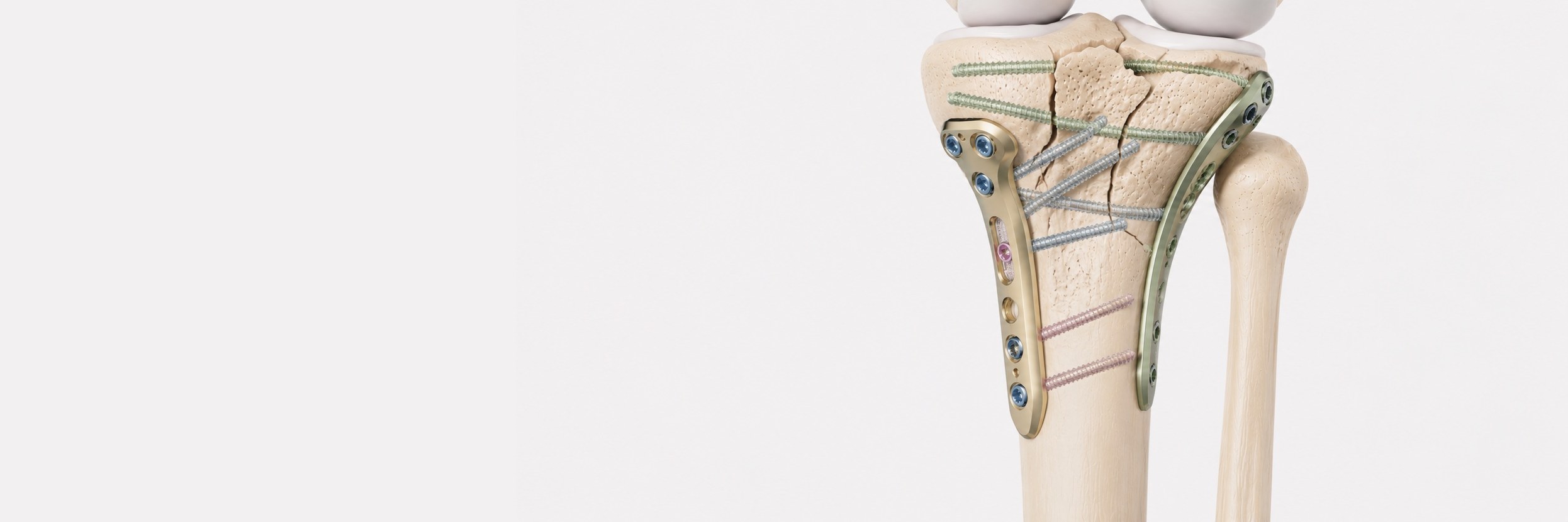
What is the 360° approach to tibial plateau fractures?
The tibial plateau is the upper end of the tibia where it forms the lower part of the knee joint. Fractures here are challenging because the joint surface must be reconstructed as accurately as possible, any residual step-off or incongruity can translate into accelerated long-term joint degeneration.
Modern understanding divides the tibial plateau into three columns: medial, lateral and posterior. Most fracture patterns involve only the anterior columns and can be addressed through a single anterior or anterolateral incision. But fractures involving the posterior column, now increasingly recognised as a distinct fracture pattern, require posterior access, which a single anterior approach cannot provide.
The 360° approach combines both anterior and posterior incisions in a single operation, providing complete visualisation and direct anatomical reduction of all three columns. It is a demanding technique that requires specific training and instrumentation, and offers the best possible opportunity of restoring the joint surface anatomically.
When is the 360° approach needed?
The 360° approach is reserved for specific fracture patterns:
- three-column fractures (Schatzker VI with posterior involvement, or fractures classified as Luo three-column)
- isolated posterior column fractures that cannot be adequately reduced through an anterior approach
- fractures with significant posterior depression that may be missed or insufficiently reduced from an anterior approach alone
- failed previous reduction with persistent posterior displacement
How is the operation planned?
Tibial plateau fractures are unforgiving, meticulous preoperative planning is essential:
- CT scan with 3D reconstruction is mandatory for complex patterns, allowing precise fracture classification according to column involvement
- assessment of the soft tissues, high-energy injuries often have skin and muscle compromise that often require time to recover before definitive fixation
- staging plan, sometimes a temporary external fixator is applied first to maintain limb length and alignment while the soft tissues recover
- careful patient positioning, typically a prone-to-supine combination, repositioning the patient between surgical approaches for the 360° access
- pre-positioned implants, locking plates and screws specifically designed for each column
How is the operation performed?
For the 360° approach, the operation typically proceeds in stages during the same anaesthetic session:
- patient positioning to allow access to both the front and back of the knee
- posterior approach first (often via the postero-medial or postero-lateral window), direct visualisation, reduction and temporary fixation of the posterior column
- patient repositioning to supine
- anterior or anterolateral approach, reduction of the medial and lateral columns, elevation of depressed articular fragments, and definitive fixation with locking plates
- arthroscopy-assisted assessment, the arthroscope is used to confirm anatomical reduction of the joint surface under direct vision, and to address any associated meniscal or cartilage injury that might otherwise remain unrecognised
- bone graft or substitute placed under elevated articular fragments to support the reconstructed joint surface
- final fluoroscopic confirmation of anatomical reduction in all planes
What should the patient expect after surgery?
- hospital stay of 4–7 days, depending on soft-tissue recovery and pain control
- non-weight-bearing on the operated leg for 8–12 weeks while the bone heals
- physiotherapy from day one, focused on restoring early knee motion, postoperative stiffness is one of the most common avoidable complications
- continuous passive motion (CPM) therapy in the early post-operative period in selected cases
- progressive partial weight-bearing from 8–10 weeks depending on radiographic evidence of healing
- full weight-bearing at approximately 12–16 weeks
- driving usually resumes at 8–12 weeks
- return to demanding activities at 6–9 months
How important is rehabilitation?
Rehabilitation is at least as important as the operation. The two major threats to a good outcome are:
- loss of motion (arthrofibrosis), prevented by early, gentle, progressive physiotherapy
- premature weight-bearing, which can lead to collapse of the reconstructed joint surface
A close working relationship with a skilled physiotherapist is essential. I follow patients closely throughout the rehabilitation process, with regular review and X-rays to confirm bone healing before each progression in weight-bearing.
What is the long-term outcome?
Outcomes after well-executed tibial plateau surgery are generally good, but they depend heavily on the accuracy of joint surface reconstruction:
- most patients regain near-normal knee function and mobility when anatomic reduction is achieved
- long-term arthritis risk is reduced (but not eliminated) by accurate reconstruction, even small residual incongruities can lead to accelerated joint wear over years
- return to low-impact sport is usual at 6–9 months
- return to high-impact sport is more variable and depends on the specific fracture
Τι είναι η προσπέλαση 360° στα κατάγματα κνημιαίου πλατώ;
Το κνημιαίο πλατώ είναι το άνω άκρο της κνήμης όπου σχηματίζει το κάτω μέρος της άρθρωσης του γόνατος. Τα κατάγματα εδώ είναι απαιτητικά γιατί η αρθρική επιφάνεια πρέπει να ανακατασκευαστεί όσο το δυνατόν πιο ανατομικά, κάθε υπολειπόμενη βαθμίδα ή ασυμφωνία μπορεί να οδηγήσει σε επιταχυνόμενη μακροπρόθεσμη εκφύλιση της άρθρωσης.
Η σύγχρονη κατανόηση χωρίζει το κνημιαίο πλατώ σε τρεις στήλες: έσω, έξω και οπίσθια. Τα περισσότερα κατάγματα περιλαμβάνουν μόνο τις πρόσθιες στήλες και μπορούν να αντιμετωπιστούν μέσω μιας πρόσθιας ή προσθιο-έξω τομής. Όμως κατάγματα που περιλαμβάνουν την οπίσθια στήλη, αναγνωρίζονται πλέον όλο και περισσότερο ως ξεχωριστό πρότυπο κατάγματος, απαιτούν οπίσθια προσπέλαση.
Η προσπέλαση 360° συνδυάζει τόσο πρόσθιες όσο και οπίσθιες τομές σε μία επέμβαση, παρέχοντας πλήρη απεικόνιση και άμεση ανατομική ανάταξη και των τριών στηλών του κνημιαίου πλατώ.
Πότε χρειάζεται η προσπέλαση 360°;
Η προσπέλαση 360° επιφυλάσσεται για συγκεκριμένα πρότυπα καταγμάτων:
- τρι-στηλικά κατάγματα (Schatzker VI με συμμετοχή οπίσθιας στήλης, ή κατάγματα Luo τριών στηλών)
- μεμονωμένα κατάγματα οπίσθιας στήλης που δεν μπορούν να ανακαμφθούν από την πρόσθια όψη
- κατάγματα με σημαντική οπίσθια εμβύθιση που θα παραβλεπόταν από μόνο πρόσθια προσπέλαση
- αποτυχημένη προηγούμενη ανάταξη με επίμονη οπίσθια παρεκτόπιση
Πώς σχεδιάζεται η επέμβαση;
Τα κατάγματα κνημιαίου πλατώ είναι ασυγχώρητα, ο σχολαστικός προεγχειρητικός σχεδιασμός είναι ουσιώδης:
- η αξονική τομογραφία με 3D ανακατασκευή είναι απαραίτητη για σύνθετα πρότυπα
- εκτίμηση μαλακών ιστών, κακώσεις υψηλής ενέργειας συχνά έχουν δερματική και μυϊκή βλάβη που συχνά χρειάζεται χρόνο για να αποκατασταθεί πριν από την οριστική οστεοσύνθεση
- σχέδιο σταδίων, μερικές φορές προσωρινή εξωτερική οστεοσύνθεση εφαρμόζεται αρχικά
- προσεκτική τοποθέτηση ασθενούς, τυπικά συνδυασμός πρηνής-ύπτιας θέσης, με επανατοποθέτηση μεταξύ των προσπελάσεων για την προσπέλαση 360°
- προ-τοποθετημένα εμφυτεύματα, πλάκες κλειδώματος και βίδες σχεδιασμένες για κάθε στήλη
Πώς γίνεται η επέμβαση;
Για την προσπέλαση 360°, η επέμβαση τυπικά προχωρά σε στάδια στην ίδια αναισθησία:
- τοποθέτηση ασθενούς για πρόσβαση στην πρόσθια και οπίσθια όψη του γόνατος
- οπίσθια προσπέλαση πρώτη (συχνά μέσω οπισθο-έσω ή οπισθο-έξω παραθύρου), άμεση απεικόνιση, ανατομική ανάταξη και προσωρινή σταθεροποίηση της οπίσθιας στήλης
- επανατοποθέτηση ασθενούς σε ύπτια θέση
- πρόσθια ή προσθιο-έξω προσπέλαση, ανάταξη έσω και έξω στηλών, ανύψωση των εμβυθισμένων αρθρικών τμημάτων, οριστική σταθεροποίηση
- αρθροσκοπικά υποβοηθούμενη εκτίμηση, το αρθροσκόπιο χρησιμοποιείται για άμεση οπτική επιβεβαίωση της ανατομικής αποκατάστασης της ανατομικής ανάταξης της αρθρικής επιφάνειας και για την αντιμετώπιση συνοδών κακώσεων μηνίσκου ή χόνδρου που διαφορετικά θα μπορούσαν να παραμείνουν αδιάγνωστες
- οστικό μόσχευμα ή υποκατάστατο τοποθετείται κάτω από ανυψωμένα αρθρικά τμήματα
- τελικός ακτινοσκοπικός έλεγχος ανατομικής ανάταξης σε όλα τα επίπεδα
Τι αναμένεται μετά την επέμβαση;
- νοσηλεία 4–7 ημερών, ανάλογα με την κατάσταση των μαλακών μορίων και τον έλεγχο του πόνου
- χωρίς φόρτιση στο εγχειρισμένο σκέλος για 8–12 εβδομάδες ενώ επουλώνεται το οστό
- φυσικοθεραπεία από την πρώτη ημέρα, η μετεγχειρητική δυσκαμψία είναι μία από τις πιο συχνές αποτρέψιμες επιπλοκές
- συσκευή συνεχούς παθητικής κίνησης (CPM) στην πρώιμη μετεγχειρητική περίοδο σε επιλεγμένες περιπτώσεις
- προοδευτική μερική φόρτιση από 8–10 εβδομάδες ανάλογα με την ακτινολογική εικόνα επούλωσης
- πλήρης φόρτιση περίπου σε 12–16 εβδομάδες
- οδήγηση σε 8–12 εβδομάδες
- επιστροφή σε απαιτητικές δραστηριότητες σε 6–9 μήνες
Πόσο σημαντική είναι η αποκατάσταση;
Η αποκατάσταση είναι τουλάχιστον εξίσου σημαντική με την επέμβαση. Οι δύο βασικοί κίνδυνοι για ένα καλό αποτέλεσμα είναι:
- απώλεια κίνησης (αρθροΐνωση), αποτρέπεται με πρώιμη, ήπια, προοδευτική φυσικοθεραπεία
- πρόωρη φόρτιση, που μπορεί να οδηγήσει σε κατάρρευση της ανακατασκευασμένης αρθρικής επιφάνειας
Η στενή σχέση με έμπειρο φυσικοθεραπευτή είναι ουσιώδης. Παρακολουθώ στενά τους ασθενείς καθ' όλη την περίοδο αποκατάστασης.
Ποιο είναι το μακροπρόθεσμο αποτέλεσμα;
Τα αποτελέσματα μετά από καλά εκτελεσμένη χειρουργική κνημιαίου πλατώ είναι γενικά καλά, αλλά εξαρτώνται σε μεγάλο βαθμό από την ακρίβεια της ανακατασκευής της αρθρικής επιφάνειας:
- οι περισσότεροι ασθενείς ανακτούν σχεδόν φυσιολογική λειτουργικότητα και κινητικότητα του γόνατος όταν επιτυγχάνεται ανατομική ανάταξη
- ο μακροπρόθεσμος κίνδυνος αρθρίτιδας μειώνεται (αλλά δεν εξαλείφεται) από την ακριβή ανακατασκευή
- επιστροφή σε μη-επίπτωσης αθλητισμό είναι συνήθης στους 6–9 μήνες
- η επιστροφή σε αθλήματα υψηλής καταπόνησης είναι πιο απρόβλεπτη