

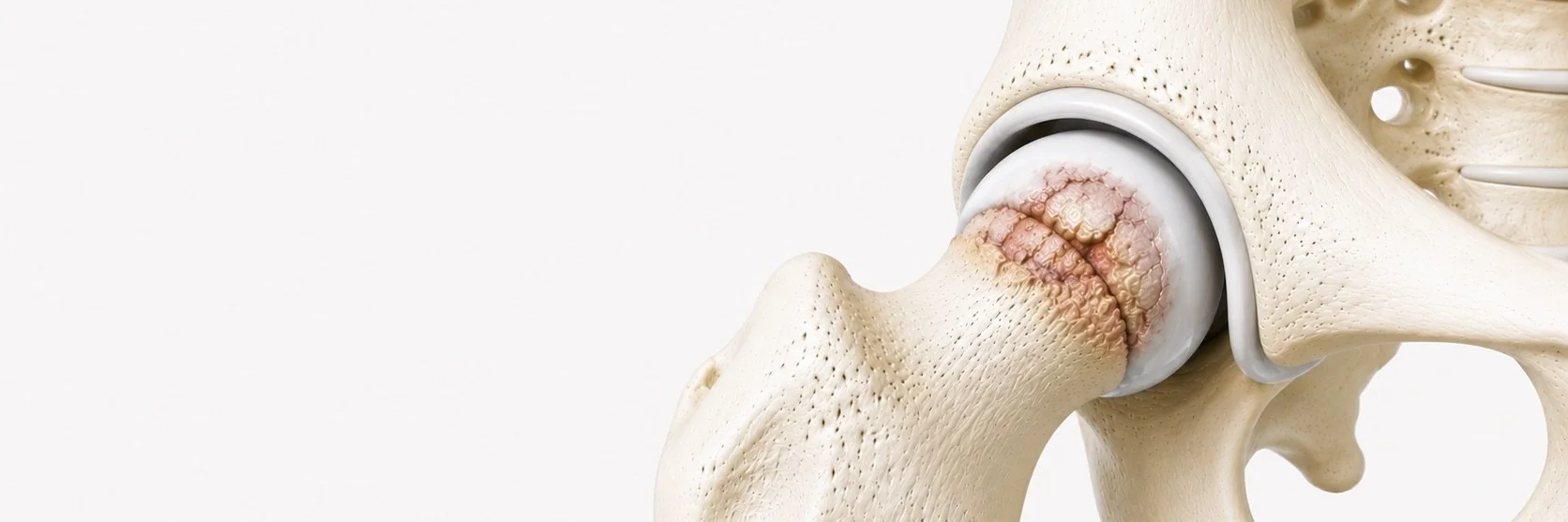
What is avascular necrosis?
Avascular necrosis (AVN) of the femoral head is a serious condition in which the blood supply to the head of the femur is disrupted. The bone tissue dies progressively and, eventually, the structural integrity of the femoral head collapses. AVN typically affects adults between 30 and 60 and, if left untreated, leads to severe arthritis of the hip, often within just a few years.
Early diagnosis is critical. The earlier AVN is identified, the greater the chance of preserving the natural hip joint.
What causes AVN?
- long-term corticosteroid use
- excessive alcohol consumption
- trauma, particularly hip fractures and dislocations
- sickle-cell disease and other haematological conditions
- radiation or chemotherapy
- decompression sickness in divers
- in many cases, no clear cause is identified (idiopathic AVN)
What are the symptoms?
- groin pain that develops gradually but can also appear suddenly
- pain that worsens with weight-bearing and improves with rest
- stiffness and reduced range of motion
- in advanced stages, a noticeable limp and pain even at rest
How is AVN diagnosed?
- X-rays, may appear normal in the very early stages
- MRI, the most sensitive investigation, capable of detecting AVN before any X-ray changes
- CT scan in selected cases for assessment of subchondral collapse
What matters most is that early diagnosis is essential. AVN identified before collapse of the femoral head has occurred can sometimes be managed with joint-preserving techniques. Once collapse has occurred, the only reliable solution is hip replacement.
What is the conservative treatment?
In very early-stage AVN, conservative options can be tried:
- protected weight-bearing
- anti-inflammatory and analgesic medication
- bisphosphonates in selected cases
- Molecular & Biological Regenerative Therapy (PRP) in selected early-stage cases
Conservative treatment alone is rarely sufficient once the disease is established.
What are the joint-preserving surgical options?
In early stages before collapse, joint-preserving procedures may delay or even prevent the need for replacement:
- core decompression, removing a small core of dead bone to relieve intra-osseous pressure and stimulate revascularisation
- bone grafting in selected cases to support the structure of the femoral head
I apply modern surgical techniques aiming for stable, joint-preserving outcomes whenever the situation allows.
When is hip replacement needed?
Once the femoral head has collapsed and arthritis has set in, total hip replacement is the most reliable solution. Hip replacement in patients with AVN gives excellent results, with reliable long-term pain relief and restoration of function.
What should the patient expect after surgery?
- the recovery depends on the procedure performed (core decompression vs total hip replacement)
- after core decompression, protected weight-bearing for 6–12 weeks
- after hip replacement, recovery as for routine total hip replacement (see Total Hip Replacement page)
- long-term follow-up is recommended in all cases of AVN to monitor the contralateral hip, bilateral disease is common