

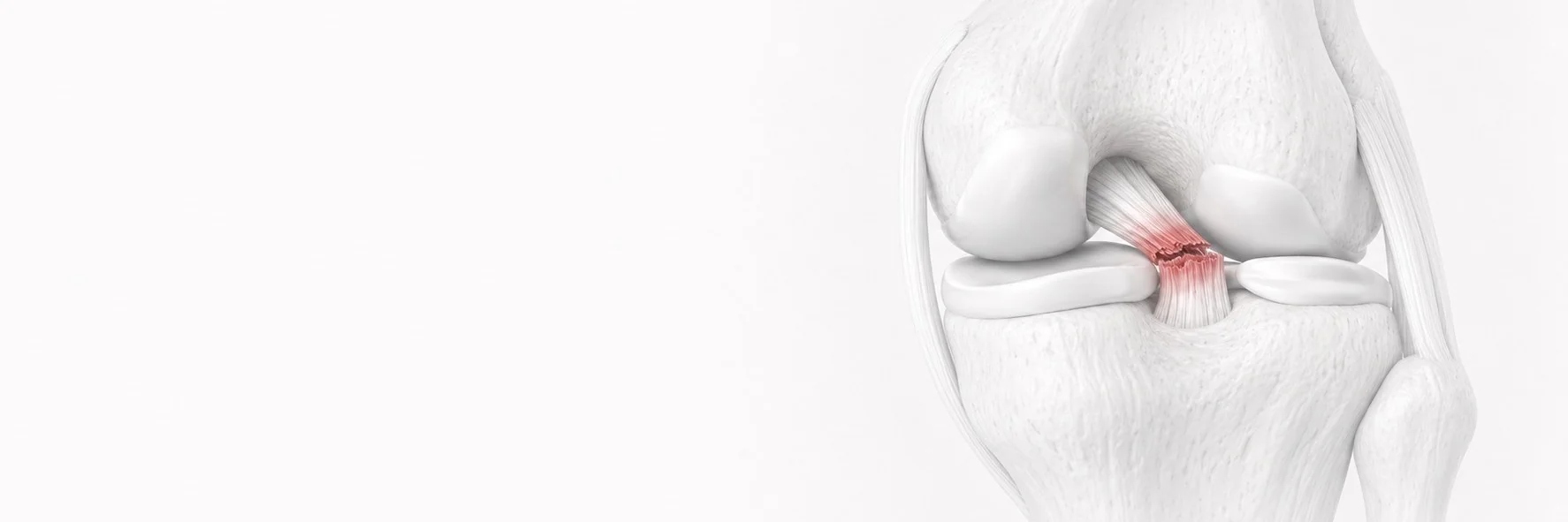
What is a PCL injury?
The posterior cruciate ligament (PCL) is the strongest ligament in the knee. It runs deep within the joint and prevents the tibia from moving backwards relative to the femur.
PCL injuries are less common than ACL injuries but more often missed at initial assessment. They typically occur from a direct blow to the front of the bent knee, most classically the "dashboard injury" in road traffic accidents, or from a hyperextension injury.
What are the symptoms?
- pain at the back of the knee
- swelling, often less dramatic than after an ACL tear
- instability, particularly going down stairs or running downhill
- difficulty with high-load activities, squatting, kneeling
- in chronic cases, gradual development of patellofemoral pain
How is the diagnosis made?
- careful clinical examination, the posterior drawer test is the most specific
- X-rays to rule out fracture and assess any chronic changes
- MRI confirms the tear and identifies any associated injuries
- in chronic cases, stress radiographs may be useful
How are PCL injuries treated?
Treatment depends on the grade of injury and whether other ligaments are involved:
- isolated grade I and II PCL injuries, almost always managed conservatively, with a focus on quadriceps strengthening
- isolated grade III injuries, many can be managed conservatively in lower-demand patients; surgery considered in active patients with persistent symptoms
- multi-ligament knee injuries involving the PCL, generally require reconstructive surgery
Conservative rehabilitation is structured: protected weight-bearing initially, progressive quadriceps strengthening, and gradual return to activity over 3–6 months.
My approach to PCL surgery
PCL reconstruction is a sub-specialised operation. The technique requires specific fellowship training, dedicated instruments and high case volume to deliver consistently good outcomes.
I do not personally operate on the PCL. When a patient under my care needs PCL reconstruction, I refer them to a sub-specialist colleague with specific fellowship training in PCL surgery. My role is:
- making the accurate, complete diagnosis, including any associated ligament or meniscus injury
- urgent identification of associated injuries that need early treatment
- multidisciplinary coordination between the patient, the operating surgeon and the rehabilitation team
- pre- and post-operative care, including the rehabilitation programme
What is the long-term outcome?
Outcomes after isolated PCL injury are generally good with structured conservative treatment, most patients regain a stable, functional knee. Multi-ligament cases involving the PCL are more complex and depend on the quality of the reconstruction and the rehabilitation.