

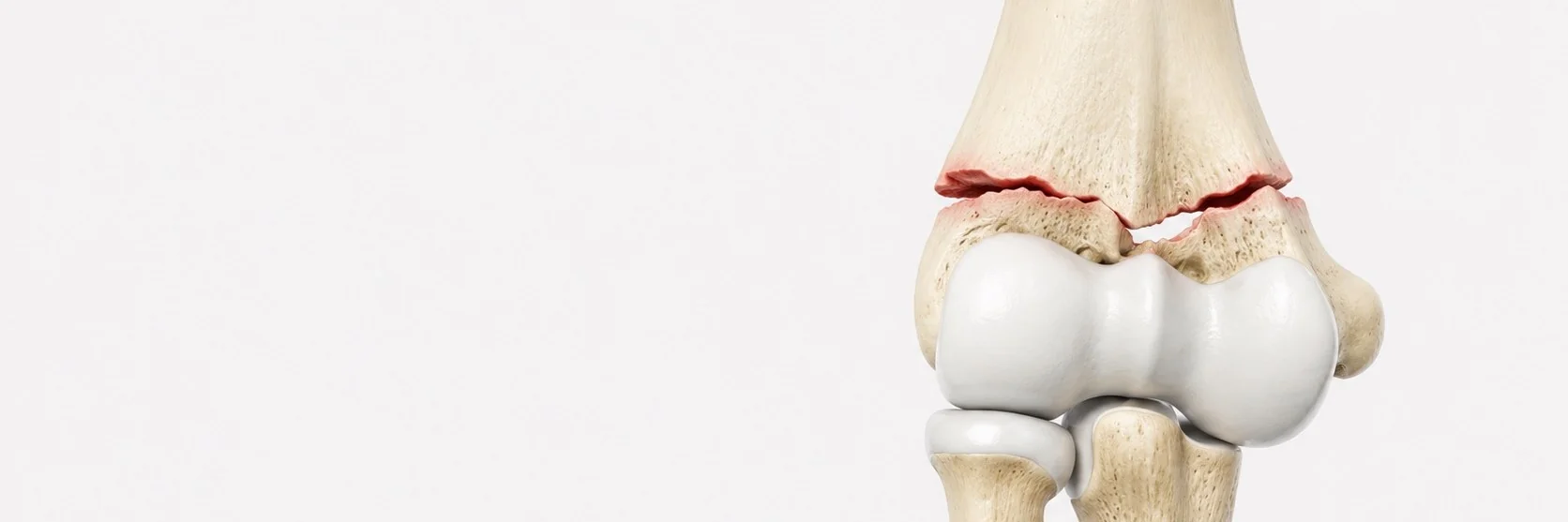
How are paediatric fractures different?
Children's bones differ fundamentally from adults'. They are more elastic, contain a growth plate (physis) at the end of each long bone, and have a much greater capacity to heal and remodel.
These differences matter for treatment. Many fractures that would need surgery in an adult heal beautifully in a child with simple immobilisation. But injuries to the growth plate require special attention, improper management can disturb growth and produce long-term deformity.
What types of fractures occur in children?
- forearm and wrist fractures, by far the most common, typically from falls
- supracondylar humerus fractures, at the elbow, requiring careful management
- femur fractures, in younger children often from falls, in older children from sport or trauma
- tibia fractures, from sport, trampolines or vehicle injuries
- growth plate (Salter-Harris) injuries, at any major joint, classified by the pattern of involvement
- greenstick and torus fractures, incomplete fractures unique to children's flexible bones
How is the diagnosis made?
- careful clinical examination, taking into account that children may not localise pain accurately
- X-rays of the affected area, often comparing with the opposite (uninjured) side
- CT or MRI in selected complex injuries, particularly involving the growth plate
How are paediatric fractures treated?
The vast majority heal well with conservative management:
- closed reduction and cast, the first choice for most fractures
- flexible intramedullary nails, for displaced femur and forearm fractures
- percutaneous pinning, for some unstable patterns, particularly at the elbow
- open reduction and internal fixation, reserved for displaced intra-articular and growth plate fractures
Growth plate injuries (Salter-Harris fractures) deserve particular attention. Anatomic reduction is essential to prevent disturbance of growth and long-term deformity.
How fast do children recover?
Children heal much faster than adults, most simple fractures unite in 3–6 weeks (compared with 6–12 weeks in adults). Stiffness is rare; children regain motion quickly once the cast comes off.
Long-term follow-up is important when the growth plate has been involved. Even with the best initial treatment, occasional growth disturbances can develop over years, and early identification allows early intervention.