

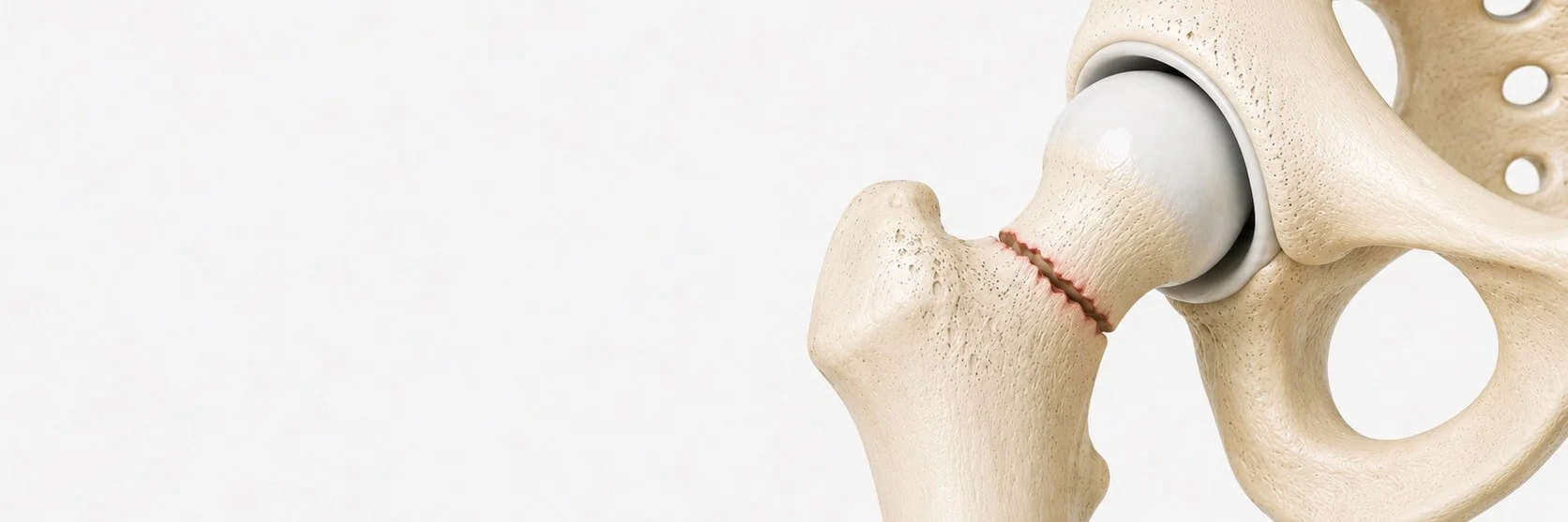
What is a hip fracture?
A hip fracture is a break in the upper end of the femur, the bone of the thigh, usually at the femoral neck or in the intertrochanteric region. Hip fractures are a major medical event, particularly in older adults: they cause severe pain, immediate loss of mobility and, if not treated promptly and well, carry serious long-term consequences.
Hip fractures require urgent assessment and, in almost all cases, surgical treatment within 24–48 hours. I treat hip fractures with the structured trauma approach I learned during my German training.
What causes a hip fracture?
- low-energy falls in older adults with osteoporosis (the great majority of cases)
- high-energy trauma in younger adults, road traffic accidents, falls from height, sporting injuries
- pathological fractures from underlying bone disease (tumor, infection)
- stress fractures from repetitive loading, particularly in athletes and military recruits
What are the symptoms?
- severe groin or hip pain immediately after a fall
- inability to bear weight on the affected leg
- the leg is typically shorter and externally rotated
- swelling and bruising around the hip
Some impacted or stress fractures present with less dramatic symptoms, pain with weight-bearing but ability to walk, and need a high index of suspicion to identify.
How is the diagnosis made?
- X-rays of the pelvis and hip, usually diagnostic
- CT or MRI when X-rays are inconclusive but clinical suspicion is high
- full medical assessment to identify underlying conditions, particularly important in elderly patients
What are the types of hip fracture?
- femoral neck fracture (intracapsular), disruption of the blood supply to the femoral head is a key concern
- intertrochanteric fracture, between the greater and lesser trochanters
- subtrochanteric fracture, below the lesser trochanter
The fracture pattern determines the surgical strategy.
Subtrochanteric fractures
These occur just below the lesser trochanter, in the upper part of the thigh bone. This region carries high loads, so these fractures are usually treated with an intramedullary nail.
What is the treatment?
Almost all hip fractures in adults require surgery. The treatment plan depends on fracture type, displacement, bone quality and patient factors:
- displaced femoral neck fractures in older patients, usually treated with hemiarthroplasty or total hip replacement, because the blood supply to the femoral head is typically disrupted
- non-displaced femoral neck fractures, internal fixation with screws
- intertrochanteric and subtrochanteric fractures, internal fixation with a sliding hip screw or an intramedullary nail
- younger patients with displaced femoral neck fractures, urgent reduction and fixation in an attempt to preserve the femoral head
I apply modern surgical techniques aiming for stable fixation, early mobilisation and the fastest possible recovery.
What should the patient expect after surgery?
- early mobilisation, usually weight-bearing as tolerated from day one
- structured physiotherapy from the day after surgery
- hospital stay typically 3–7 days, depending on overall health and rehabilitation needs
- rehabilitation continues at home or at a rehabilitation facility
- in elderly patients, comprehensive medical care including bone health assessment, fall prevention and nutritional support
The key thing is that timing is critical. Early surgery, within 24–48 hours, combined with early mobilisation and a multidisciplinary approach significantly improves outcomes and reduces complications.